
How to Build a Bookshelf
Learn how to build a bookshelf with measurements, lumber, cuts, assembly, squaring, sanding, anchoring, mistakes, troubleshooting, and FAQs.
Quick Answer
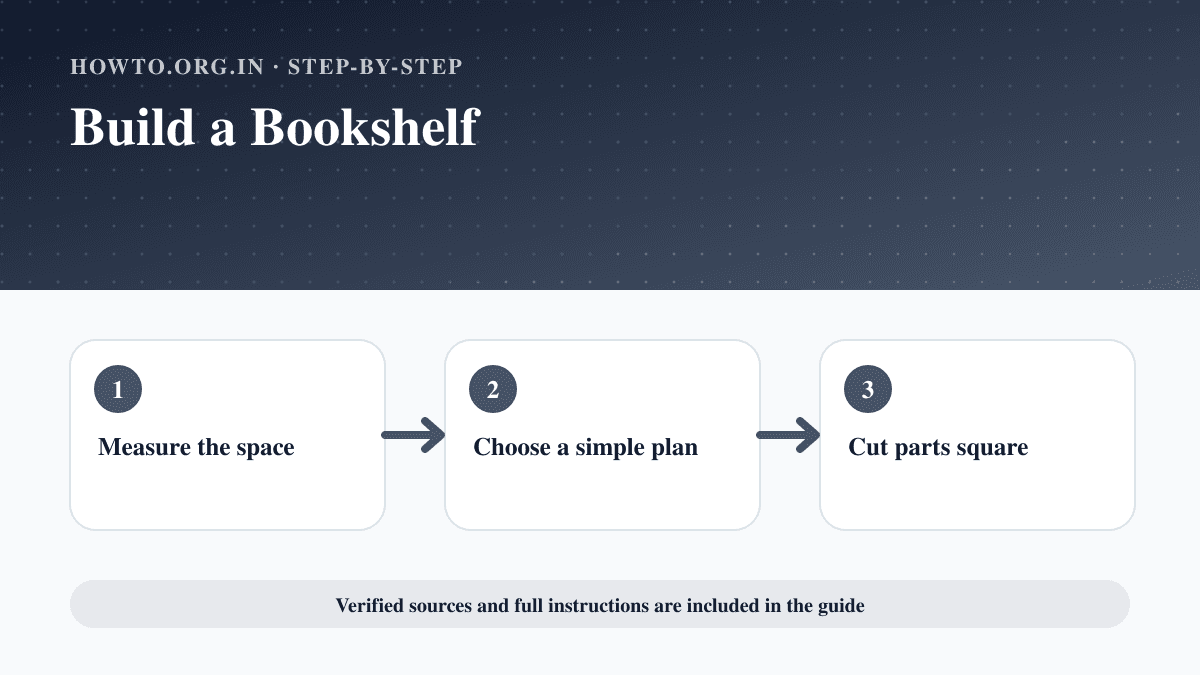
To build a bookshelf, measure the space, choose a simple design, cut side panels and shelves square, predrill holes, assemble the frame, check for square, add a back or bracing, sand and finish, then anchor the bookshelf to the wall to reduce tip-over risk.
Tools and Materials
- Wood or plywood
- Saw
- Drill
- Screws
- Measuring tape
- Square
- Clamps
- Sandpaper
- Finish optional
- Wall anchor kit
Safety Precautions
- Wear eye and hearing protection when cutting.
- Use clamps and safe saw technique.
- Predrill to reduce splitting.
- Anchor tall or heavy bookshelves to the wall, especially around children or pets.
- Check wall type and studs before anchoring.
Step-by-Step Instructions
- Step 1
Measure the space
Record height, width, depth, baseboards, outlets, and clearance.
- Step 2
Choose a simple plan
Use a basic rectangular design if this is your first build.
- Step 3
Cut parts square
Cut two sides, top, bottom, and shelves accurately.
- Step 4
Mark shelf positions
Mark matching shelf lines on both side panels.
- Step 5
Predrill and assemble
Use clamps, predrill holes, and fasten shelves to the sides.
- Step 6
Check for square
Measure diagonals or use a square before adding the back.
- Step 7
Sand and finish
Smooth edges and apply paint, stain, or clear finish if desired.
- Step 8
Anchor to wall
Use a wall anchor or bracket into studs or correct anchors for the wall type.
Practical Example
Example: You build a 36-inch wide plywood bookshelf with three fixed shelves, sand the edges, paint it, and anchor it to a wall stud with a furniture strap.
Common Mistakes
- No wall anchor
- Shelves too long without support
- Cuts not square
- Skipping predrill
- Ignoring baseboards
- Using weak backing only for structure
Troubleshooting
Bookshelf wobbles
Check square, add a back panel or bracing, and anchor to the wall.
Shelves sag
Use thicker material, shorter spans, or center supports.
Screws split wood
Predrill and avoid screws too close to edges.
It does not sit flush
Account for baseboards or use wall spacers when anchoring.
Helpful Internal Links
FAQs
Should I anchor a bookshelf?
Yes, tall or loaded bookshelves should be anchored to reduce tip-over risk.
What wood is good for a bookshelf?
Plywood and solid wood are common; choose thickness based on shelf span and load.
How do I prevent shelf sag?
Use shorter spans, thicker shelves, strong material, or supports.
Can beginners build a bookshelf?
Yes, with a simple plan, careful measuring, and safety steps.
Related Guides
How to Use a Router Table
Learn how to use a router table safely with bit setup, fence, featherboards, push blocks, test cuts, mistakes, troubleshooting, and when to stop.
How to Install a Mailbox
Learn how to install a curbside mailbox with USPS placement rules, post hole steps, concrete, alignment, safety checks, mistakes, and troubleshooting.
How to Hang a Picture
Learn how to hang a picture with measuring, wall type, anchors, hooks, level checks, spacing, common mistakes, troubleshooting, and FAQs.
Help us improve this guide
Tell us about an outdated instruction, unclear step, broken link or safety concern. Do not include passwords, account numbers, medical records or other sensitive information.