
How to Clean an Oven
Learn how to clean an oven safely with manual cleaning steps, racks, glass door, self-cleaning cautions, mistakes to avoid, troubleshooting, and FAQs.
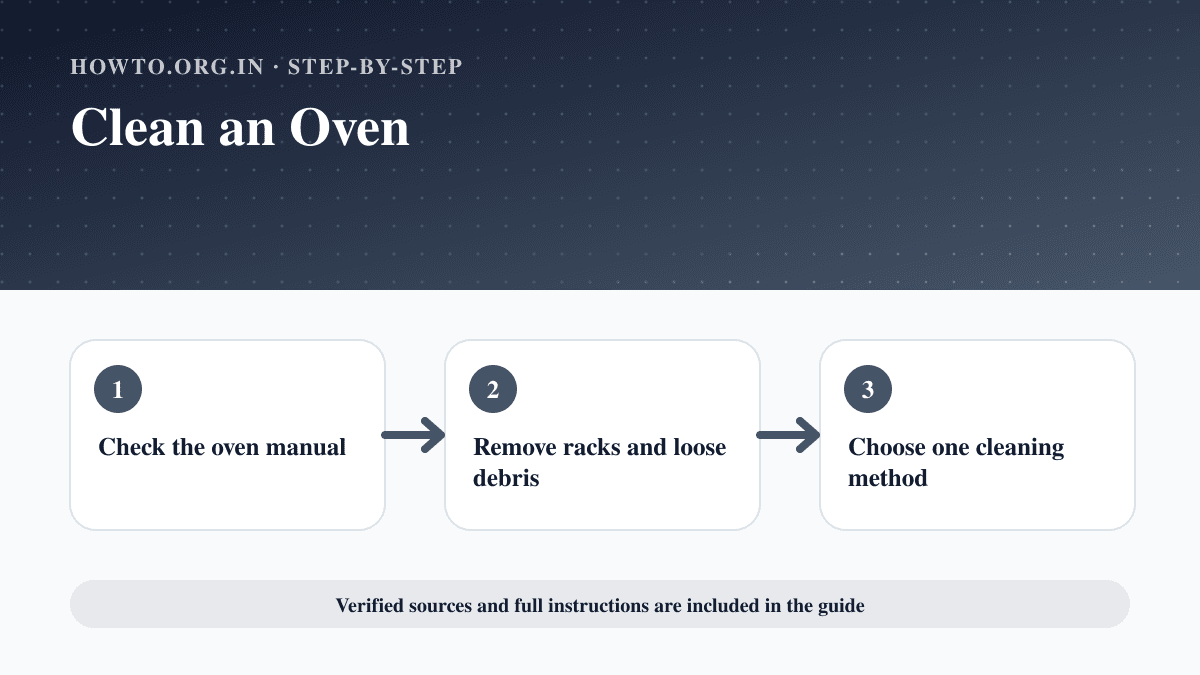
Quick Answer
To clean an oven, turn it off and let it cool, remove racks, wipe loose crumbs, apply an oven-safe cleaner or mild baking soda paste as directed, let it sit, scrub with a non-scratch sponge, wipe residue with clean damp cloths, wash racks separately, dry everything, and ventilate before cooking again.
Supplies Required
- Non-scratch sponge
- Microfiber cloths
- Dish soap
- Baking soda paste or oven cleaner
- Gloves
- Bucket or sink for racks
- Plastic scraper if needed
Safety Precautions
- Turn the oven off and let it cool fully before manual cleaning.
- Follow the oven manual and cleaner label.
- Ventilate the kitchen.
- Do not mix cleaning chemicals.
- Keep children and pets away during cleaning and self-clean cycles.
Step-by-Step Instructions
- Step 1
Check the oven manual
Confirm whether your oven has special coating, steam clean, or self-clean instructions.
- Step 2
Remove racks and loose debris
Take out racks and wipe crumbs or burnt pieces from the bottom.
- Step 3
Choose one cleaning method
Use either a labeled oven cleaner, mild dish soap for light soil, or baking soda paste. Do not combine chemicals.
- Step 4
Apply cleaner and wait
Spread cleaner on dirty interior surfaces while avoiding heating elements, fans, and vents unless the manual says otherwise.
- Step 5
Scrub gently
Use a non-scratch sponge or plastic scraper for softened grime.
- Step 6
Wipe repeatedly
Use clean damp cloths until residue is gone. Cleaner residue can smoke or smell during the next use.
- Step 7
Wash racks separately
Soak racks in warm soapy water, scrub, rinse, and dry.
- Step 8
Clean the door glass
Use a gentle cleaner and soft cloth. Avoid forcing liquid into door seams.
- Step 9
Dry and air out
Leave the door open briefly, then heat the oven only after all residue and odor are gone.
Practical Example
Example: After a casserole spill, you let the oven cool overnight, remove racks, scrape loose food, apply baking soda paste to the spill, wait, wipe with damp cloths, wash racks in the sink, and air out the oven before baking again.
Common Mistakes
- Cleaning while the oven is warm
- Mixing cleaners
- Using abrasive tools on coated surfaces
- Spraying cleaner into vents or fans
- Leaving cleaner residue behind
- Running self-clean without reading the manual
Troubleshooting
The oven smokes after cleaning
Turn it off, cool it, and wipe again with clean damp cloths. Residue or leftover grease may remain.
Racks are still sticky
Soak longer in warm soapy water, scrub with a non-scratch pad, rinse, and dry.
The oven smells like cleaner
Wipe again and ventilate. Do not cook food while strong chemical odor remains.
Self-clean cycle scares me
Use manual cleaning and follow your oven manual. Self-clean uses very high heat and is not ideal for every situation.
Helpful Internal Links
FAQs
Can I use baking soda to clean an oven?
Yes, for many manual cleaning jobs, but it still requires time, wiping, and residue removal.
Is the self-cleaning cycle safe?
It can be used on ovens designed for it, but follow the manual, ventilate, and keep children and pets away.
How often should I clean my oven?
Spot-clean spills quickly and deep clean when grease or burnt residue builds up.
Can I use steel wool?
Avoid steel wool on most oven interiors because it can scratch coatings.
Related Guides
How to Clean a Microwave
Learn how to clean a microwave with water, vinegar or lemon, dish soap, and safe wiping steps. Includes burnt smell fixes, mistakes, troubleshooting, and FAQs.
How to Clean a Blender
Learn how to clean a blender with quick soap blend, blade safety, gasket care, odor removal, mistakes, troubleshooting, and FAQs.
How to Clean a Carpet
Learn how to clean a carpet with vacuuming, spot treatment, deep cleaning, drying, stain safety, common mistakes, troubleshooting, and FAQs.
Help us improve this guide
Tell us about an outdated instruction, unclear step, broken link or safety concern. Do not include passwords, account numbers, medical records or other sensitive information.