
How to Get Rid of Weeds
Learn how to get rid of weeds with pulling, mulching, mowing, targeted treatments, prevention, safety notes, mistakes, troubleshooting, and FAQs.
Quick Answer
To get rid of weeds, identify where they are growing, pull small weeds with roots after watering, mulch bare soil, mow lawns at the right height, avoid letting weeds seed, spot treat only when needed, follow product labels carefully, and improve soil, watering, and lawn density to prevent weeds from returning.
Tools and Materials
- Gardening gloves
- Hand weeder or trowel
- Mulch
- Trash bag or compost plan
- Lawn mower
- Spot treatment product if needed
- Protective gear listed on product label
Safety Precautions
- Follow herbicide labels exactly if using them.
- Keep children and pets away from treated areas as directed.
- Do not spray on windy days.
- Avoid runoff into drains, ponds, or edible plants.
- Use boiling water only where it cannot splash or damage wanted plants.
Step-by-Step Instructions
- Step 1
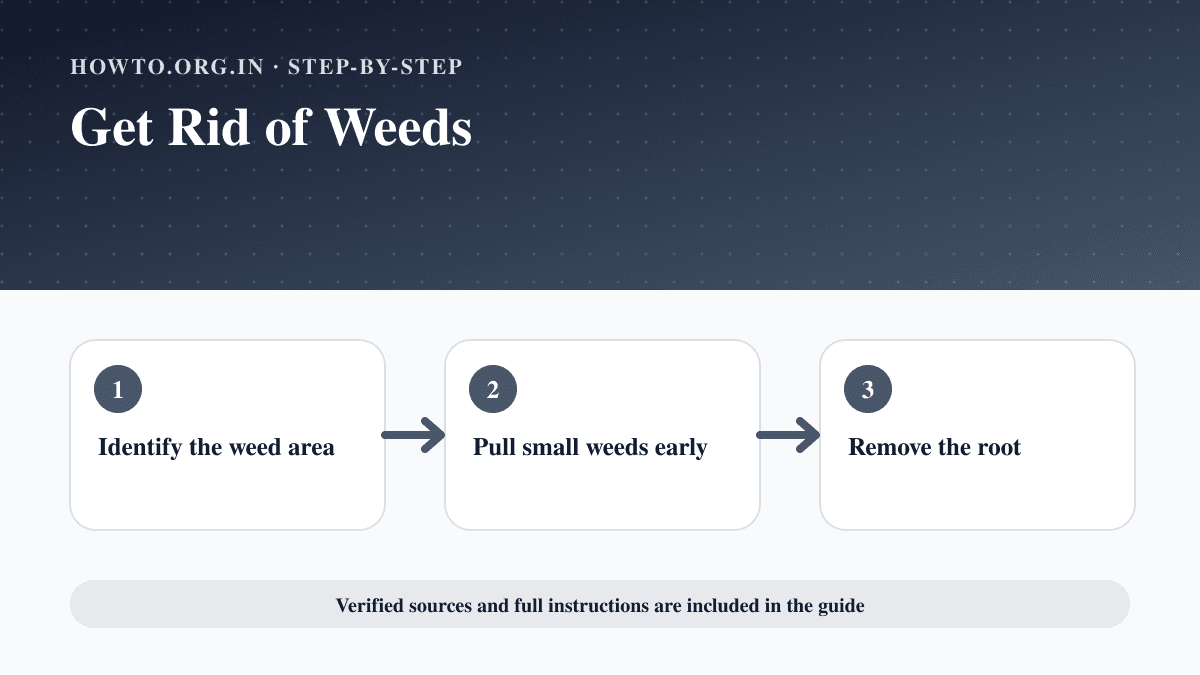
Identify the weed area
Lawn weeds, garden-bed weeds, and driveway cracks need different methods.
- Step 2
Pull small weeds early
Water first or pull after rain so roots come out more easily.
- Step 3
Remove the root
Taproot weeds can regrow if the root remains. Use a hand weeder for deep roots.
- Step 4
Dispose before seeds spread
Bag seed heads or invasive weeds instead of dropping them back on soil.
- Step 5
Mulch bare soil
A layer of mulch blocks light and reduces new weed growth in beds.
- Step 6
Improve lawn density
Mow at the right height, water deeply as appropriate, and overseed thin areas.
- Step 7
Use spot treatment carefully
If pulling and prevention are not enough, treat only the affected area and follow the label.
- Step 8
Recheck weekly
Small weeds are easier to remove than mature weeds with seeds.
Practical Example
Example: Dandelions appear in a small lawn patch. You water the area, pull them with a weeder, remove the taproots, mow higher, overseed the thin patch, and recheck weekly before new seed heads form.
Common Mistakes
- Pulling only the leaves
- Letting weeds go to seed
- Spraying on windy days
- Using nonselective products near wanted plants
- Leaving bare soil uncovered
- Assuming one treatment solves prevention
Troubleshooting
Weeds keep coming back
Look for bare soil, compacted soil, thin lawn, poor mowing height, or seeds already in the soil.
Weeds grow between pavers
Pull or treat carefully, then refill gaps with appropriate joint sand or barrier material.
Herbicide damaged nearby plants
Stop spraying, water according to product guidance if appropriate, and avoid windy-day application next time.
I cannot identify the weed
Use a local extension service, garden center, or plant ID app before choosing treatment.
Helpful Internal Links
FAQs
What is the easiest way to remove weeds?
For small patches, hand pulling after rain is simple and effective if you remove roots.
Does vinegar kill weeds?
Vinegar can burn foliage but may also harm wanted plants and may not kill deep roots. Use caution.
Should I mulch after weeding?
Yes. Mulch helps block light and reduces new weed growth in garden beds.
How do I stop weeds permanently?
No method is permanent, but dense planting, healthy lawn care, mulch, and regular early removal reduce weeds greatly.
Related Guides
How to Paint a Room
Learn how to paint a room with tools, prep steps, wall repair, taping, cutting in, rolling, drying, second coat tips, mistakes, troubleshooting, and FAQs.
How to Assemble Furniture
Learn how to assemble furniture with parts sorting, instructions, tools, alignment, safety, common mistakes, troubleshooting, and FAQs.
How to Attract Birds
Learn how to attract birds with native plants, clean water, safe feeders, shelter, nesting habitat, pesticide reduction, mistakes, troubleshooting, and FAQs.
Help us improve this guide
Tell us about an outdated instruction, unclear step, broken link or safety concern. Do not include passwords, account numbers, medical records or other sensitive information.