
How to Attract Birds
Learn how to attract birds with native plants, clean water, safe feeders, shelter, nesting habitat, pesticide reduction, mistakes, troubleshooting, and FAQs.
Quick Answer
To attract birds, provide clean water, native plants, safe shelter, and the right food for local species. Keep feeders clean, place them away from predators and window-collision risks, avoid pesticides where possible, plant seed- and berry-producing native plants, and keep a consistent, safe habitat rather than relying only on birdseed.
What You Need
- Clean birdbath or shallow water source
- Native plants or shrubs
- Bird feeder if desired
- Quality birdseed for local birds
- Cleaning brush
- Safe placement away from predators
- Patience
Safety Precautions
- Clean feeders and water sources regularly to reduce disease risk.
- Place feeders to reduce cat access and window collisions.
- Avoid pesticides where possible because many birds rely on insects.
- Use local guidance for feeding wildlife and invasive plant rules.
- Do not handle sick or dead birds without local wildlife guidance.
Step-by-Step Instructions
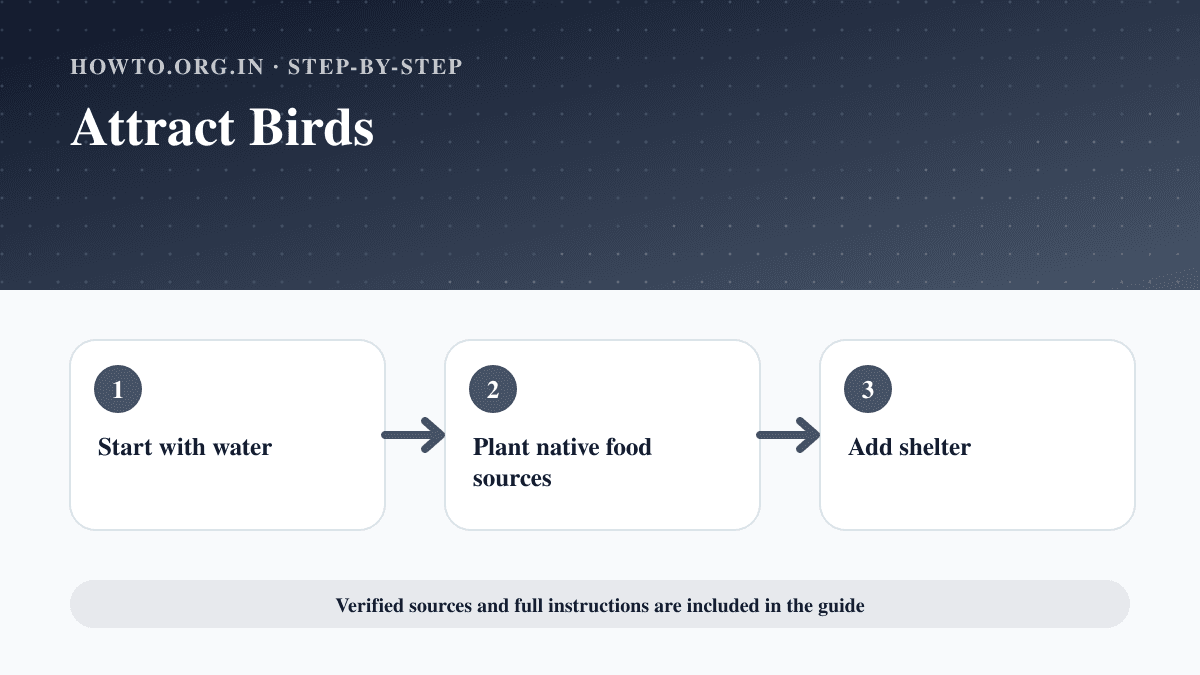
- Step 1
Start with water
A shallow birdbath or moving water source can attract birds, especially in hot or dry weather.
- Step 2
Plant native food sources
Native shrubs, flowers, grasses, and trees can provide seeds, berries, nectar, insects, and shelter.
- Step 3
Add shelter
Use layered planting, shrubs, evergreens, brush piles, or safe nesting boxes appropriate for local species.
- Step 4
Choose feeder food carefully
Use quality seed, suet, nectar, or mealworms based on the birds you want and local conditions.
- Step 5
Place feeders safely
Keep feeders away from easy predator access and consider window-collision prevention.
- Step 6
Keep everything clean
Wash feeders and birdbaths regularly and remove spoiled food.
- Step 7
Reduce hazards
Avoid pesticides, keep cats indoors or away from feeding areas, and reduce reflective window risks.
- Step 8
Observe and adjust
Different birds prefer different foods, heights, cover, and seasons. Adjust slowly and watch what works.
Practical Example
Example: You add a shallow birdbath, plant native coneflowers and berry shrubs, place a clean feeder near cover but away from cats, and start seeing finches and sparrows within a few weeks.
Common Mistakes
- Letting feeders get dirty
- Using stale or moldy seed
- Putting feeders where cats can ambush birds
- Ignoring water
- Planting only lawn with no shelter
- Expecting instant results
Troubleshooting
No birds visit
Add water and native cover, check food freshness, and give birds time to discover the habitat.
Squirrels take the food
Use baffles, squirrel-resistant feeders, and better placement.
Birds hit windows
Move feeders very close or farther from windows and use decals, cords, or screens to reduce reflections.
Food gets moldy
Offer smaller amounts, clean feeders, and protect food from rain where practical.
Helpful Internal Links
FAQs
What attracts birds the fastest?
Clean water and safe food can help quickly, but native plants and shelter create longer-term results.
What plants attract birds?
Native seed, berry, nectar, and insect-supporting plants are usually best. Use a local native plant database where available.
Should I feed birds year-round?
It depends on local conditions and your ability to keep feeders clean and stocked safely.
How often should I clean bird feeders?
Clean regularly and more often in wet, hot, or crowded conditions.
Related Guides
How to Start a Garden
Learn how to start a garden with site choice, sunlight, soil, beginner plants, watering, mulch, mistakes, troubleshooting, and FAQs.
How to Plant a Tree
Learn how to plant a tree with site choice, root flare, hole depth, watering, mulch, staking, common mistakes, troubleshooting, and FAQs.
How to Get Rid of Weeds
Learn how to get rid of weeds with pulling, mulching, mowing, targeted treatments, prevention, safety notes, mistakes, troubleshooting, and FAQs.
Help us improve this guide
Tell us about an outdated instruction, unclear step, broken link or safety concern. Do not include passwords, account numbers, medical records or other sensitive information.