
How to Start a Business
Learn how to start a business with idea validation, market research, business plan, costs, structure, registration, banking, launch steps, mistakes, and FAQs.
Quick Answer
To start a business, choose a clear problem to solve, research customers and competitors, validate demand, write a simple business plan, estimate startup costs, choose a legal structure, register as required, set up banking and records, prepare your offer, and launch with a small test before scaling.
What You Need
- Business idea
- Target customer
- Market research
- Simple business plan
- Startup cost estimate
- Business name options
- Registration and tax requirements
- Basic bookkeeping system
Safety Precautions
- This is educational information, not legal, tax, or financial advice.
- Check official local rules before registering, hiring, collecting tax, or signing contracts.
- Avoid spending heavily before validating demand.
- Use qualified professionals for legal, tax, licensing, or funding decisions.
Step-by-Step Instructions
- Step 1
Define the problem and customer
Write who you serve, what problem you solve, and why they would pay.
- Step 2
Research the market
Study competitors, pricing, demand, customer pain points, and substitutes.
- Step 3
Validate the idea
Talk to potential customers, test a small offer, collect preorders, or run a pilot.
- Step 4
Write a simple plan
Summarize offer, audience, pricing, costs, marketing, operations, and goals.
- Step 5
Estimate startup costs
List equipment, software, inventory, rent, licenses, marketing, and emergency cash.
- Step 6
Choose structure and name
Compare common business structures and check name availability under local rules.
- Step 7
Register and set up records
Complete required registrations, tax IDs, bank accounts, and bookkeeping.
- Step 8
Launch small
Start with a narrow offer, get feedback, improve, then expand.
Practical Example
Example: A home bakery validates demand with weekend preorders, estimates ingredient and packaging costs, checks local food rules, creates a simple bookkeeping sheet, and launches with three products.
Common Mistakes
- Skipping market research
- Starting too broad
- Spending before validation
- Ignoring licenses or taxes
- Mixing personal and business money
- Underpricing
- No record keeping
Troubleshooting
I have too many ideas
Choose the one with a clear customer, urgent need, and realistic first sale.
No one is buying
Interview customers, adjust the offer, test pricing, and improve distribution.
Costs are higher than expected
Start smaller, delay non-essential purchases, and track cash weekly.
Registration is confusing
Use official government resources or consult a qualified professional.
Helpful Internal Links
FAQs
Do I need a business plan?
Yes, but a short practical plan is enough for many small starts.
Should I register before testing?
It depends on local rules and risk. Validate demand early, but follow required legal and tax rules.
How much money do I need?
It depends on the business model. Estimate costs and start as lean as possible.
Can I start a business while employed?
Often yes, but check employment agreements, conflicts of interest, and time commitments.
Related Guides
How to Write a Business Plan
Learn how to write a business plan with executive summary, market, offer, customers, operations, marketing, finances, mistakes, troubleshooting, and FAQs.
How to Create Invoices
Learn how to create professional invoices with required details, line items, payment terms, a simple example, GST note for Indian users, common mistakes, troubleshooting, and FAQs.
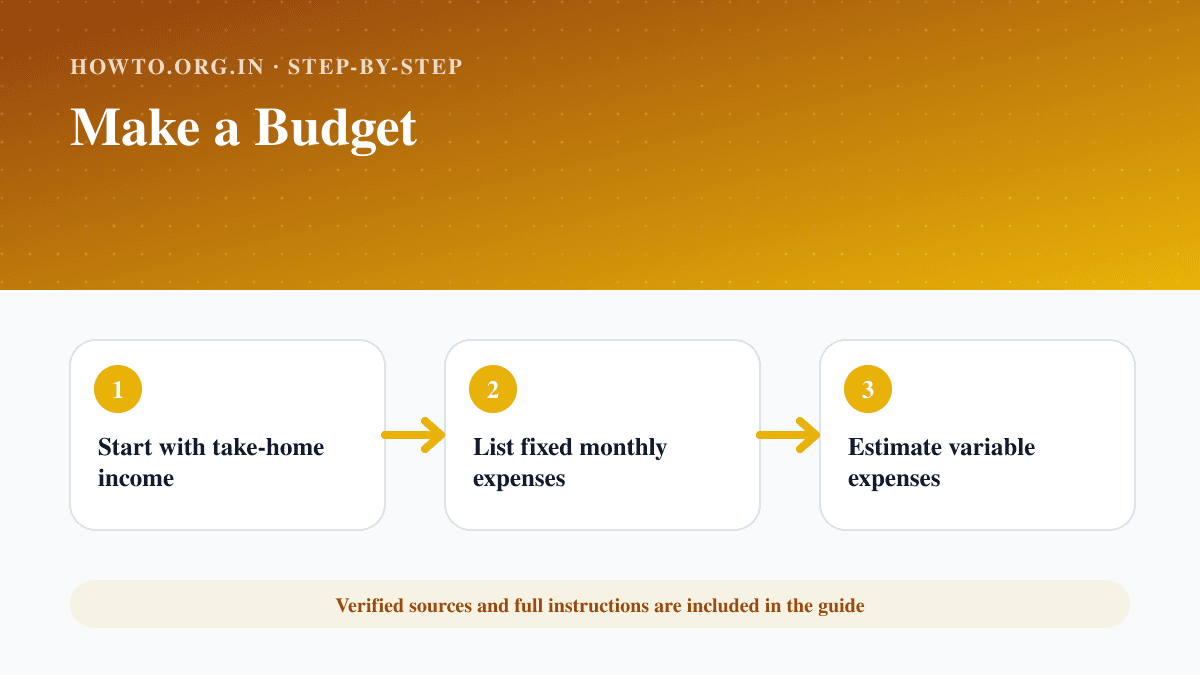
How to Make a Budget
Learn how to make a personal or household budget with income, expenses, the 50/30/20 rule, zero-based budgeting, a monthly example, mistakes, troubleshooting, and FAQs.
Help us improve this guide
Tell us about an outdated instruction, unclear step, broken link or safety concern. Do not include passwords, account numbers, medical records or other sensitive information.