
How to Start a Garden
Learn how to start a garden with site choice, sunlight, soil, beginner plants, watering, mulch, mistakes, troubleshooting, and FAQs.
Quick Answer
To start a garden, choose what you want to grow, pick a sunny spot near water, start small, check your soil and frost dates, remove weeds, improve soil with compost, choose beginner-friendly plants, plant at the right depth and spacing, water consistently, mulch, and check the garden every few days.
Tools and Materials
- Sunny space or containers
- Seeds or starter plants
- Compost or potting mix
- Trowel
- Watering can or hose
- Mulch
- Plant labels
- Local frost date information
Safety Precautions
- Use gloves when working in soil.
- Follow seed packet and plant label guidance.
- Avoid using unknown chemicals near edible plants.
- Start small so the garden stays manageable.
- Check local climate before planting warm-season crops.
Step-by-Step Instructions
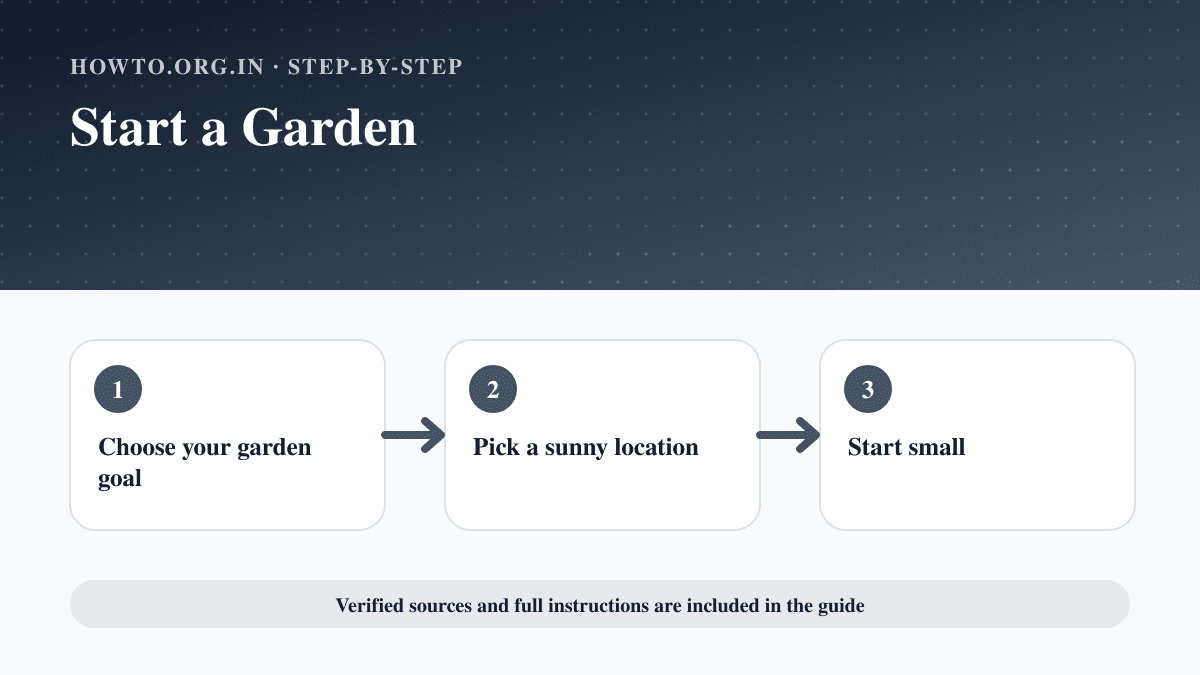
- Step 1
Choose your garden goal
Decide whether you want vegetables, herbs, flowers, pollinator plants, or a simple container garden.
- Step 2
Pick a sunny location
Most vegetables need several hours of direct sun. Choose a spot near water if possible.
- Step 3
Start small
A small bed or a few containers are easier to maintain than a large first garden.
- Step 4
Check timing
Use local frost dates and seed packets to know when to plant cool-season and warm-season crops.
- Step 5
Prepare soil
Remove weeds, loosen soil, and add compost or quality potting mix.
- Step 6
Choose beginner plants
Herbs, lettuce, beans, tomatoes, marigolds, and radishes can be good starter options depending on climate.
- Step 7
Plant correctly
Follow spacing and depth instructions. Crowded plants struggle.
- Step 8
Water gently
Keep seeds and new transplants evenly moist, then water deeply as plants grow.
- Step 9
Mulch and maintain
Mulch helps retain moisture and suppress weeds. Check for pests, dry soil, and overgrowth regularly.
Practical Example
Example: You start with two containers on a sunny balcony: basil and cherry tomatoes. You use fresh potting mix, water consistently, add stakes for tomatoes, and check the plants every morning.
Common Mistakes
- Starting too big
- Planting before the right season
- Choosing a shady spot for sun-loving plants
- Overwatering or underwatering
- Planting seeds too deep
- Ignoring spacing
Troubleshooting
Seeds do not sprout
Check planting depth, soil temperature, seed age, and moisture.
Plants look weak
Check sunlight, watering, soil nutrients, and spacing.
Weeds take over
Pull weeds early, mulch bare soil, and avoid letting weeds seed.
Leaves are being eaten
Inspect for pests and use local extension guidance for safe control.
Helpful Internal Links
FAQs
What is the easiest garden for beginners?
A small container garden or raised bed with herbs, lettuce, or a few vegetables is often easiest.
How much sun does a garden need?
Many vegetables need 6 or more hours of sun, while some herbs and leafy greens tolerate less.
Should I start with seeds or plants?
Starter plants are easier for some crops; seeds are cheaper and work well for quick crops like radishes and lettuce.
How often should I water?
Check soil moisture regularly. Water needs depend on plant type, weather, container size, and soil.
Related Guides
How to Plant a Tree
Learn how to plant a tree with site choice, root flare, hole depth, watering, mulch, staking, common mistakes, troubleshooting, and FAQs.
How to Get Rid of Weeds
Learn how to get rid of weeds with pulling, mulching, mowing, targeted treatments, prevention, safety notes, mistakes, troubleshooting, and FAQs.
How to Grow Tomatoes
Learn how to grow tomatoes with sunlight, soil, planting depth, watering, support, pruning basics, common mistakes, troubleshooting, and FAQs.
Help us improve this guide
Tell us about an outdated instruction, unclear step, broken link or safety concern. Do not include passwords, account numbers, medical records or other sensitive information.