
How to Start a Vegetable Garden
Learn how to start a vegetable garden with site selection, soil prep, beginner crops, watering, spacing, mistakes, troubleshooting, and FAQs.
Quick Answer
To start a vegetable garden, choose a sunny spot, start small, improve the soil with compost, pick beginner crops that match your season, plant with correct spacing, water consistently, mulch, and check plants weekly for pests, weeds, and harvest timing.
Tools and Materials
- Sunny garden space or containers
- Compost
- Trowel or shovel
- Seeds or seedlings
- Watering can or hose
- Mulch
- Plant labels
- Gardening gloves
Safety Precautions
- Check whether soil near old paint, roads, or treated wood needs testing before growing food.
- Use compost and fertilizers according to label directions.
- Wash vegetables before eating.
- Wear gloves when handling soil or compost.
- Choose non-toxic pest control methods around children, pets, and edible plants.
Step-by-Step Instructions
- Step 1
Choose a sunny spot
Most vegetables need about 6 or more hours of direct sun.
- Step 2
Start small
Begin with one raised bed, a few containers, or a compact in-ground plot.
- Step 3
Improve soil
Mix in compost and remove rocks, weeds, and compacted clumps.
- Step 4
Pick beginner crops
Choose crops that match your season, such as lettuce, beans, tomatoes, peppers, herbs, or radishes.
- Step 5
Plant with spacing
Follow seed packet or plant tag spacing so roots and leaves have room.
- Step 6
Water deeply
Keep soil evenly moist while seedlings establish, then water based on weather.
- Step 7
Mulch and monitor
Mulch to reduce weeds and inspect plants weekly for problems.
Practical Example
Example: You start with two tomato plants, basil, lettuce, and beans in a sunny raised bed, add compost, water in the morning, and harvest lettuce first while slower crops grow.
Common Mistakes
- Starting too large
- Planting in too much shade
- Ignoring soil quality
- Crowding plants
- Watering lightly every day
- Planting outside the right season
Troubleshooting
Seedlings are leggy
Give them more light and avoid starting indoors too early.
Leaves turn yellow
Check watering, drainage, nutrients, and pests.
Plants flower but do not fruit
Check pollination, heat stress, and watering consistency.
Weeds take over
Mulch and weed when seedlings are small.
Helpful Internal Links
FAQs
What vegetables are easiest for beginners?
Lettuce, radishes, beans, herbs, tomatoes, and peppers are common beginner choices when planted in the right season.
Can I start a vegetable garden in containers?
Yes, many vegetables grow well in containers with drainage, sun, and regular watering.
How often should I water vegetables?
Water when the soil begins to dry below the surface; hot weather and containers need more attention.
Do I need raised beds?
No, raised beds help with control and drainage, but containers or in-ground beds can also work.
Related Guides
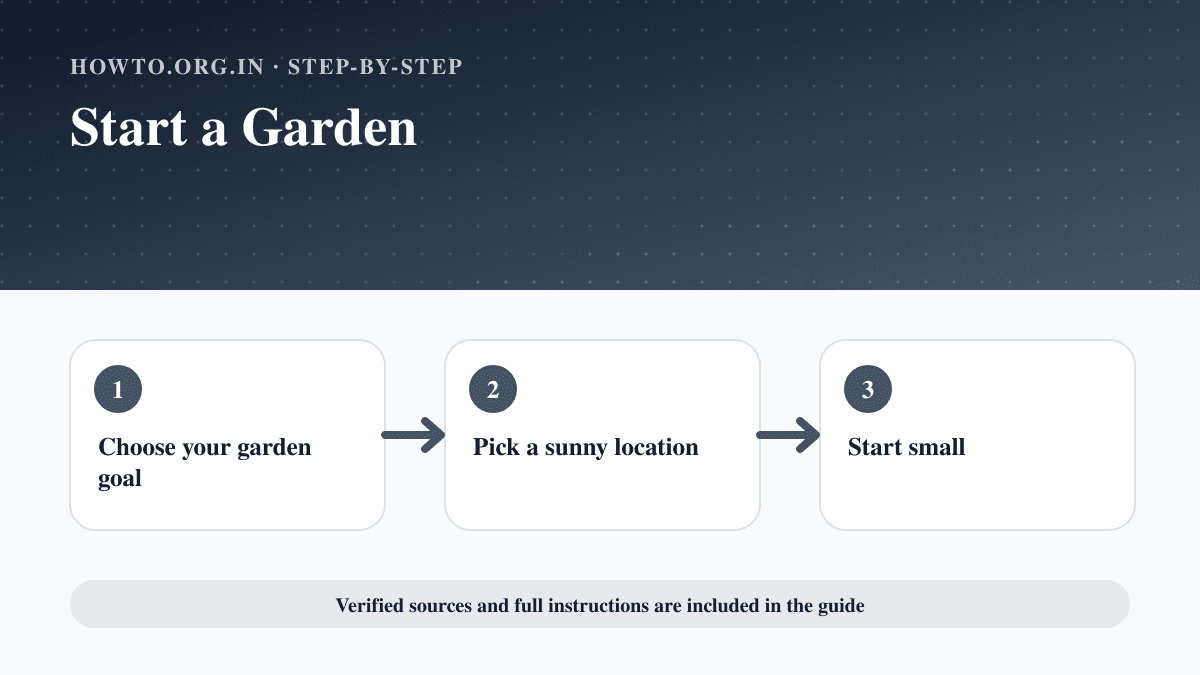
How to Start a Garden
Learn how to start a garden with site choice, sunlight, soil, beginner plants, watering, mulch, mistakes, troubleshooting, and FAQs.
How to Prune Roses
Learn how to prune roses with clean tools, timing, outward-facing buds, deadwood removal, mistakes, troubleshooting, and FAQs.
How to Start Composting
Learn how to start composting with greens, browns, bin setup, moisture, turning, what not to add, mistakes, troubleshooting, and FAQs.
Help us improve this guide
Tell us about an outdated instruction, unclear step, broken link or safety concern. Do not include passwords, account numbers, medical records or other sensitive information.