
How to Start Journaling for Beginners
Learn how to start journaling with simple prompts, a realistic routine, common mistakes, troubleshooting, privacy tips, and FAQs.
Quick Answer
To start journaling, choose a notebook or app, write for five minutes, use one simple prompt, avoid editing yourself, repeat a few times per week, and keep the journal private enough that you can be honest.
What You Need
- Notebook or journaling app
- Pen if using paper
- Five-minute time block
- Simple prompt
- Private storage place
Safety Precautions
- Keep private journals secure if others can access them.
- Do not pressure yourself to write perfectly.
- If journaling brings up distressing thoughts, consider talking with a trusted person or professional.
- Avoid using journaling as the only support for serious mental health concerns.
- Back up digital journals if they matter to you.
Step-by-Step Instructions
- Step 1
Choose a format
Use paper if you like writing by hand or an app if you prefer search and backup.
- Step 2
Start with five minutes
Set a short timer so journaling feels easy.
- Step 3
Use one prompt
Try “What is on my mind?” or “What do I want to remember from today?”
- Step 4
Write without editing
Focus on getting thoughts down, not making perfect sentences.
- Step 5
Add a small routine
Connect journaling to morning coffee, bedtime, or a weekly review.
- Step 6
Review gently
Look back occasionally for patterns, ideas, or decisions.
- Step 7
Adjust style
Use bullets, paragraphs, gratitude lists, logs, or sketches as needed.
Practical Example
Example: Each evening, you write three bullets: what happened, what felt important, and one thing to do tomorrow.
Common Mistakes
- Buying supplies instead of writing
- Trying to write pages every day immediately
- Editing too much
- Using prompts that feel forced
- Leaving private notes unsecured
- Quitting after missing a day
Troubleshooting
You do not know what to write
Use a simple prompt or list three things from the day.
You miss several days
Restart with one five-minute entry rather than trying to catch up.
Writing feels too emotional
Pause, ground yourself, and consider support if distress continues.
You worry someone will read it
Use a secure app, password, or private storage spot.
Helpful Internal Links
FAQs
Do I need to journal every day?
No. A few consistent entries per week can still be useful.
Should journaling be handwritten?
Either paper or digital can work. Choose the format you will actually use.
What is a good first prompt?
Try “What is on my mind right now?” because it is simple and flexible.
Is journaling therapy?
No. It can support reflection, but it is not a substitute for professional help when needed.
Related Guides
How to Start a Morning Routine
Learn how to start a realistic morning routine with small habits, timing, planning, common mistakes, troubleshooting, and FAQs.
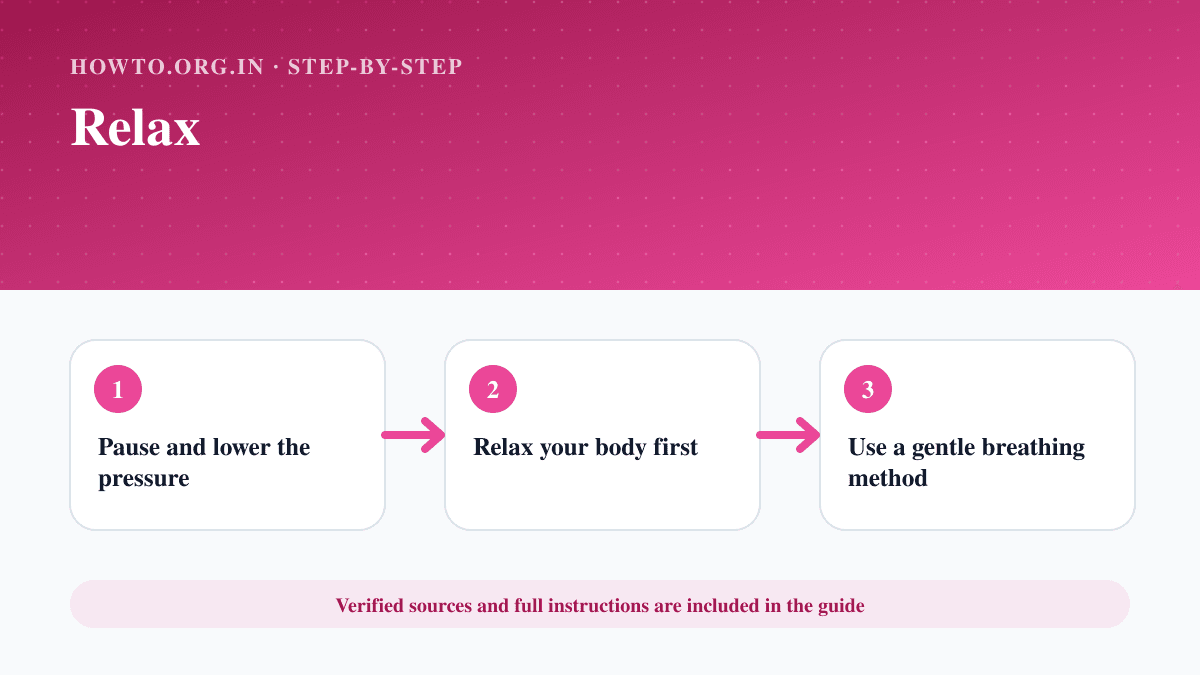
How to Relax
Learn simple ways to relax with a 5-minute routine, breathing method, daily relaxation habits, common mistakes, troubleshooting, and when to get professional help.
How to Learn Effectively
Learn how to study effectively with clear goals, active recall, spaced repetition, practice, review, common mistakes, troubleshooting, and FAQs.
Help us improve this guide
Tell us about an outdated instruction, unclear step, broken link or safety concern. Do not include passwords, account numbers, medical records or other sensitive information.