
How to Relax
Learn simple ways to relax with a 5-minute routine, breathing method, daily relaxation habits, common mistakes, troubleshooting, and when to get professional help.
Quick Answer
To relax, pause for a few minutes, sit comfortably, loosen your shoulders and jaw, breathe in gently through your nose, breathe out slowly, notice your surroundings, and do one small calming action such as stretching, walking, listening to quiet music, or writing down what is on your mind. This is general wellness information, not medical or mental health advice.
Simple Ways to Relax
- Take 5 slow breaths with a longer exhale than inhale
- Step away from the screen or stressful task for a few minutes
- Relax your jaw, shoulders, hands, and stomach
- Take a short walk at an easy pace
- Name 5 things you can see and 4 things you can feel
- Listen to calming music or quiet background sound
- Write one worry and one next action on paper
- Do a gentle stretch without forcing your body
Safety Precautions
- Use relaxation techniques as general self-care, not as a replacement for medical or mental health care.
- Do not force deep breathing, hold your breath for long periods, or continue a technique that makes you dizzy or uncomfortable.
- If you have a breathing, heart, panic, trauma, or other health condition, use techniques that feel safe for you and ask a qualified professional if unsure.
- If distress feels intense, unsafe, or unmanageable, seek help from a trusted person, local emergency service, crisis line, or qualified professional.
Step-by-Step Instructions
- Step 1
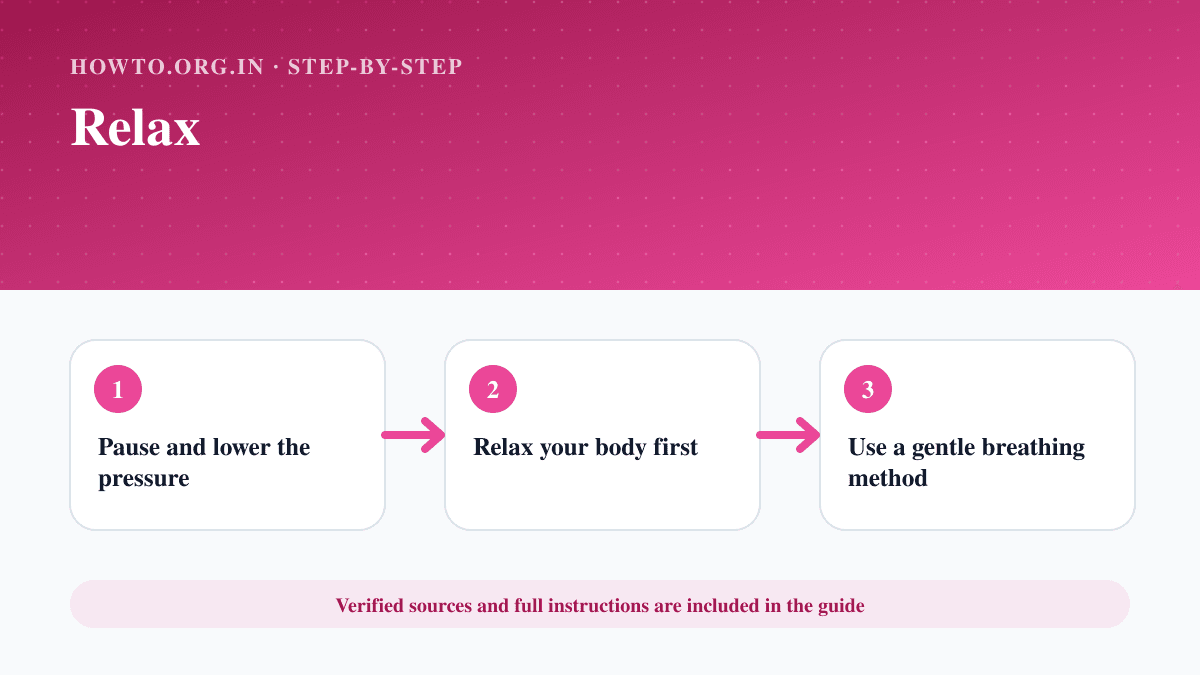
Pause and lower the pressure
Tell yourself you only need a few minutes. Sit or stand somewhere safe, silence unnecessary notifications, and give your attention one small place to land.
- Step 2
Relax your body first
Drop your shoulders, unclench your jaw, soften your hands, and let your feet rest on the floor. Physical tension often keeps the mind feeling busy.
- Step 3
Use a gentle breathing method
Breathe in through your nose for a comfortable count of 3 or 4, then breathe out slowly for a count of 4 to 6. Keep it easy; the goal is steady breathing, not perfect counting.
- Step 4
Ground yourself with your senses
Look around and name five things you can see, four things you can feel, three things you can hear, two things you can smell, and one thing you can taste or appreciate.
- Step 5
Choose one calming action
Try a short walk, quiet music, stretching, a warm drink, stepping outside, drawing, reading a few pages, or tidying one small area. Pick something simple enough to start now.
- Step 6
Make it a small daily routine
Schedule one repeatable relaxation moment, such as five minutes after lunch, after work, or before bed. Regular short practice is easier to keep than a long routine you avoid.
5-Minute Relaxation Routine
- Minute 1
Settle your posture
Sit comfortably, put both feet on the floor, and let your shoulders drop.
- Minute 2
Breathe gently
Breathe in for 3 or 4 counts and breathe out for 4 to 6 counts. Keep the breath comfortable.
- Minute 3
Release obvious tension
Relax your forehead, jaw, neck, shoulders, hands, stomach, and legs one area at a time.
- Minute 4
Use your senses
Notice what you can see, hear, and feel around you without trying to change anything.
- Minute 5
Choose the next calm step
Pick one small action: drink water, take a short walk, write one note, stretch, or return to your task slowly.
Practical Example
Example: After a long work call, you feel tense and distracted. You put your phone face down, sit with both feet on the floor, breathe in for 4 and out for 6 five times, relax your shoulders, name five objects in the room, and take a two-minute walk before returning to work.
Common Mistakes
- Trying to force yourself to relax immediately
- Using a breathing pattern that feels uncomfortable
- Scrolling social media and calling it rest even when it makes you feel worse
- Waiting until stress is extreme before taking a short break
- Turning relaxation into another performance goal
- Ignoring ongoing distress that may need real support
Troubleshooting
Breathing exercises make me uncomfortable
Stop the exercise and breathe normally. Try grounding with your senses, gentle walking, music, or stretching instead. You do not have to use breathwork to relax.
My mind keeps racing
Write down the thought, then write one next action or “not now.” Give your brain a parking place instead of arguing with every thought.
I only relax for a minute and then feel tense again
That is common. Use shorter, more frequent pauses and reduce one source of stimulation, such as notifications, noise, or multitasking.
I fall asleep when I try to relax
If you need rest, sleep may be useful. If you need to stay awake, relax sitting upright, keep your eyes open, or choose a short walk.
Relaxation does not help my stress
Relaxation is only one tool. If stress is persistent, intense, or affecting daily life, consider talking to a qualified professional or trusted support person.
What to Avoid
- Do not use alcohol, drugs, or risky behavior as your main way to relax.
- Do not force long breath holds or intense breathing exercises if they feel bad.
- Do not compare your relaxation routine to someone else’s.
- Do not ignore sleep, food, movement, and boundaries; relaxation works better when basic needs are supported.
- Do not treat online wellness advice as a diagnosis or treatment plan.
When to Get Help
- You feel unable to cope, unsafe, or at risk of harming yourself or someone else.
- Stress, worry, panic, low mood, anger, or sleep problems are interfering with work, school, relationships, or daily life.
- Physical symptoms such as chest pain, fainting, severe shortness of breath, or sudden weakness occur.
- You rely on alcohol, drugs, self-harm, or other unsafe coping methods.
- Relaxation techniques repeatedly make symptoms worse or bring up distressing memories.
- You are unsure whether what you are feeling is stress, a health issue, or a mental health concern.
Sources and Review
Reviewed by Pramod Tiwari, Editor; official-source verification on 2026-08-08.
- Managing Stress — Centers for Disease Control and Prevention
Helpful Internal Links
FAQs
What is the fastest way to relax?
A quick starting point is to stop what you are doing, relax your shoulders and jaw, breathe out slowly, and focus on one thing you can see or feel right now.
Does relaxation mean emptying my mind?
No. Most people still have thoughts. Relaxation usually means giving your body and attention a calmer focus, not forcing the mind to go blank.
What breathing method is easiest for beginners?
Try breathing in gently for 3 or 4 counts and breathing out for 4 to 6 counts. Keep it comfortable and stop if you feel dizzy or uncomfortable.
Can I relax without meditating?
Yes. Walking, stretching, music, drawing, reading, spending time outside, or taking a screen break can all be relaxing for different people.
How often should I practice relaxing?
Short daily practice is easier than waiting for a stressful moment. Even 5 minutes once or twice a day can help build a habit.
Is this mental health advice?
No. This is general wellness information. It is not a substitute for professional mental health or medical advice, diagnosis, or treatment.
Related Guides
How to Build a Sleep Hygiene Routine
Create a consistent sleep routine using regular timing, morning light, a calm wind-down and safer bedroom habits.
How to Swim
Learn how to swim safely as a beginner with water comfort, floating, kicking, breathing, basic strokes, mistakes, troubleshooting, and when to get lessons.
How to Access Archived Gmail
Learn how to find archived Gmail messages, search All Mail, move emails back to Inbox, avoid common mistakes, troubleshoot missing messages, and use FAQs.
Help us improve this guide
Tell us about an outdated instruction, unclear step, broken link or safety concern. Do not include passwords, account numbers, medical records or other sensitive information.