
How to Unclog a Drain
Learn how to unclog a sink, shower, or tub drain safely with boiling water caution, plunger, drain snake, baking soda method, mistakes, and FAQs.
Quick Answer
To unclog a drain, remove visible debris, avoid mixing chemicals, try hot water if safe for your pipes, use a plunger, clean the stopper or trap if accessible, use a drain snake for hair or buildup, flush with water, and call a plumber if the clog returns, affects multiple drains, or sewage backs up.
Tools Required
- Rubber gloves
- Bucket
- Plunger
- Drain snake or zip tool
- Old towel
- Baking soda and vinegar if using a mild DIY method
- Flashlight
Safety Precautions
- Never mix drain cleaner with bleach, vinegar, ammonia, or other products.
- Do not use boiling water on pipes or fixtures that may be damaged by heat.
- Stop if sewage backs up or multiple drains are clogged.
- Wear gloves and eye protection when handling dirty drain parts.
Step-by-Step Instructions
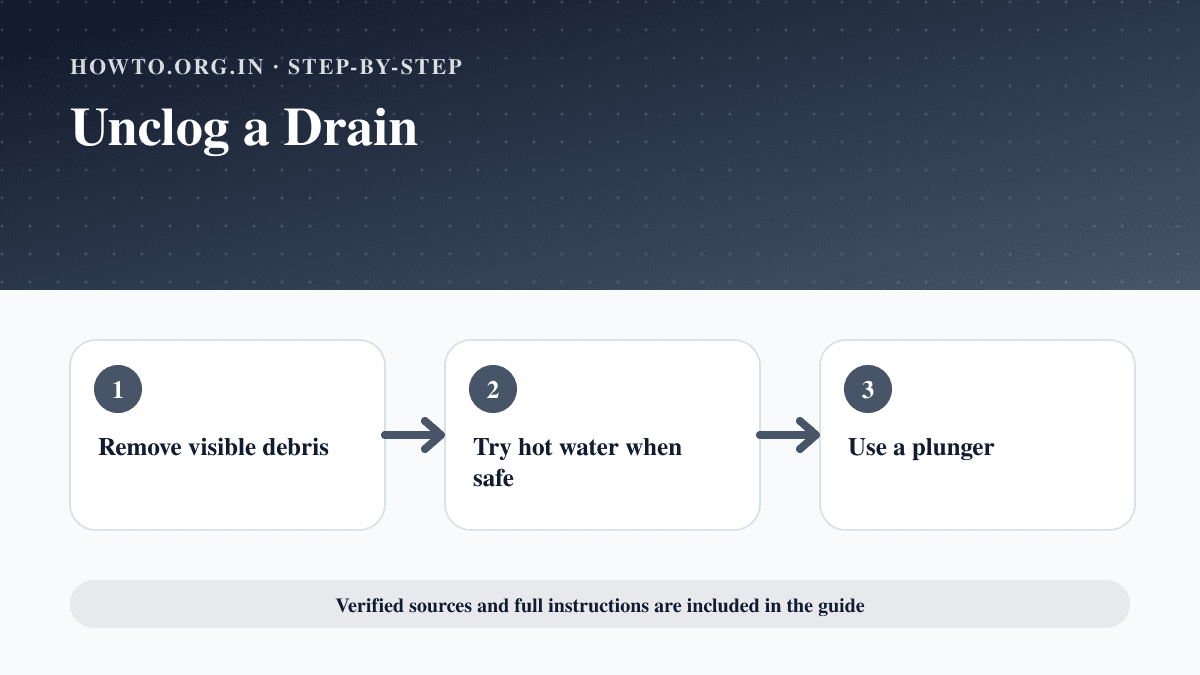
- Step 1
Remove visible debris
Pull out hair, food, or soap buildup from the drain opening if you can reach it safely.
- Step 2
Try hot water when safe
For grease or soap buildup, run hot water. Avoid boiling water if your pipe or fixture material cannot handle it.
- Step 3
Use a plunger
Cover overflow openings if needed, create a seal, and plunge steadily for 20 to 30 seconds.
- Step 4
Clean the stopper
Bathroom sink and tub stoppers often trap hair. Remove and clean them if the design allows.
- Step 5
Use a drain snake
Feed a small snake or zip tool into the drain, pull back debris, and repeat gently.
- Step 6
Try a mild baking soda method
If appropriate, pour baking soda, then vinegar, wait briefly, and flush. Do not combine this with commercial cleaners.
- Step 7
Flush and test
Run water and watch how quickly it drains.
- Step 8
Call help for bigger signs
Multiple clogged drains, sewage smell, or backup usually means a larger plumbing problem.
Practical Example
Example: A shower drains slowly. You remove the cover, pull out hair with a zip tool, plunge the drain, flush with hot tap water, and the water begins draining normally.
Common Mistakes
- Mixing chemical cleaners
- Using too much force with a snake
- Ignoring multiple clogged drains
- Pouring grease down kitchen drains
- Using boiling water where it may damage materials
- Skipping gloves
Troubleshooting
The clog keeps returning
There may be deeper buildup, venting problems, or pipe issues. Call a plumber.
Water backs up into another drain
Stop using fixtures and call a plumber because the blockage may be in a shared line.
A chemical cleaner was already used
Do not add anything else. Follow the product label and consider professional help.
The drain smells bad
Clean visible buildup and flush. Persistent sewer odor needs plumbing inspection.
Helpful Internal Links
FAQs
Can baking soda and vinegar unclog a drain?
It may help mild buildup, but it is not a guaranteed fix for hair, solid clogs, or deeper plumbing problems.
Is drain cleaner safe?
Some products can work when used exactly as labeled, but they can be hazardous and should never be mixed.
When should I call a plumber?
Call if multiple drains clog, sewage backs up, water returns in another fixture, or clogs keep coming back.
How do I prevent drain clogs?
Use strainers, keep grease out of drains, clean stoppers, and flush drains regularly with hot tap water when safe.
Related Guides
How to Clean a Microwave
Learn how to clean a microwave with water, vinegar or lemon, dish soap, and safe wiping steps. Includes burnt smell fixes, mistakes, troubleshooting, and FAQs.
How to Clean an Oven
Learn how to clean an oven safely with manual cleaning steps, racks, glass door, self-cleaning cautions, mistakes to avoid, troubleshooting, and FAQs.
How to Unclog a Sink
Learn how to unclog a sink with safe first steps, plunger, trap cleaning, drain snake, mistakes to avoid, troubleshooting, and FAQs.
Help us improve this guide
Tell us about an outdated instruction, unclear step, broken link or safety concern. Do not include passwords, account numbers, medical records or other sensitive information.