
How to Be Confident
Learn how to be more confident with small goals, preparation, body language, self-talk, practice, mistakes, troubleshooting, and when to seek help.
Quick Answer
To be more confident, start with small achievable actions, prepare for situations that make you nervous, practice skills regularly, use realistic self-talk, improve posture and eye contact, keep promises to yourself, spend time with supportive people, and treat mistakes as feedback instead of proof that you cannot improve.
What You Need
- One small goal
- Practice situation
- Notebook or notes app
- Supportive person if available
- Patience for repeated practice
Safety Precautions
- This is general self-improvement content, not mental health or medical advice.
- If anxiety, depression, panic, or low self-worth seriously affects daily life, consider professional support.
- Avoid comparing your progress to someone else’s highlight reel.
Step-by-Step Instructions
- Step 1
Pick one situation
Choose a specific area, such as speaking in meetings, meeting new people, interviews, or learning a skill.
- Step 2
Set a tiny goal
Make the first goal achievable, such as asking one question or practicing for 10 minutes.
- Step 3
Prepare before the moment
Write notes, rehearse, or learn the basics so confidence has something to stand on.
- Step 4
Use realistic self-talk
Replace extreme thoughts with balanced statements, such as I can handle one step.
- Step 5
Practice body basics
Stand or sit upright, breathe steadily, and make comfortable eye contact.
- Step 6
Take action before you feel perfect
Confidence usually grows after repeated action, not before the first attempt.
- Step 7
Review what worked
After trying, write one thing that went well and one thing to improve.
- Step 8
Repeat with slightly bigger steps
Increase difficulty gradually as your comfort grows.
Practical Example
Example: You want confidence in meetings. This week, your small goal is to ask one prepared question. After the meeting, you note that your voice was steady and plan to share one idea next time.
Common Mistakes
- Waiting to feel confident before acting
- Setting goals that are too big
- Comparing yourself constantly
- Confusing confidence with arrogance
- Ignoring preparation
- Treating one mistake as failure
Troubleshooting
I freeze in the moment
Use smaller practice steps, write notes, and rehearse the first sentence.
I keep comparing myself
Track your own progress and reduce exposure to comparison triggers.
People criticized me
Separate useful feedback from unhelpful comments, then choose one improvement.
Low confidence affects daily life
Consider talking with a qualified mental health professional or counselor.
When to Get Help
- Fear or low self-worth stops you from normal work, school, or relationships.
- You have panic symptoms, ongoing depression, or intense social anxiety.
- You avoid important life tasks because of confidence issues.
- You feel unsafe or hopeless.
Helpful Internal Links
FAQs
Can confidence be learned?
Yes. Confidence often grows from preparation, repeated practice, and evidence that you can handle situations.
How can I look more confident?
Use steady posture, calm breathing, clear speech, and comfortable eye contact, but pair appearance with real preparation.
What is the fastest way to build confidence?
Pick one small action you can repeat today. Quick wins build momentum.
Is confidence the same as arrogance?
No. Confidence is trust in your ability to act; arrogance dismisses others or reality.
Related Guides
How to Start a Conversation
Learn how to start a conversation with timing, openers, questions, listening, follow-ups, exits, common mistakes, troubleshooting, and FAQs.
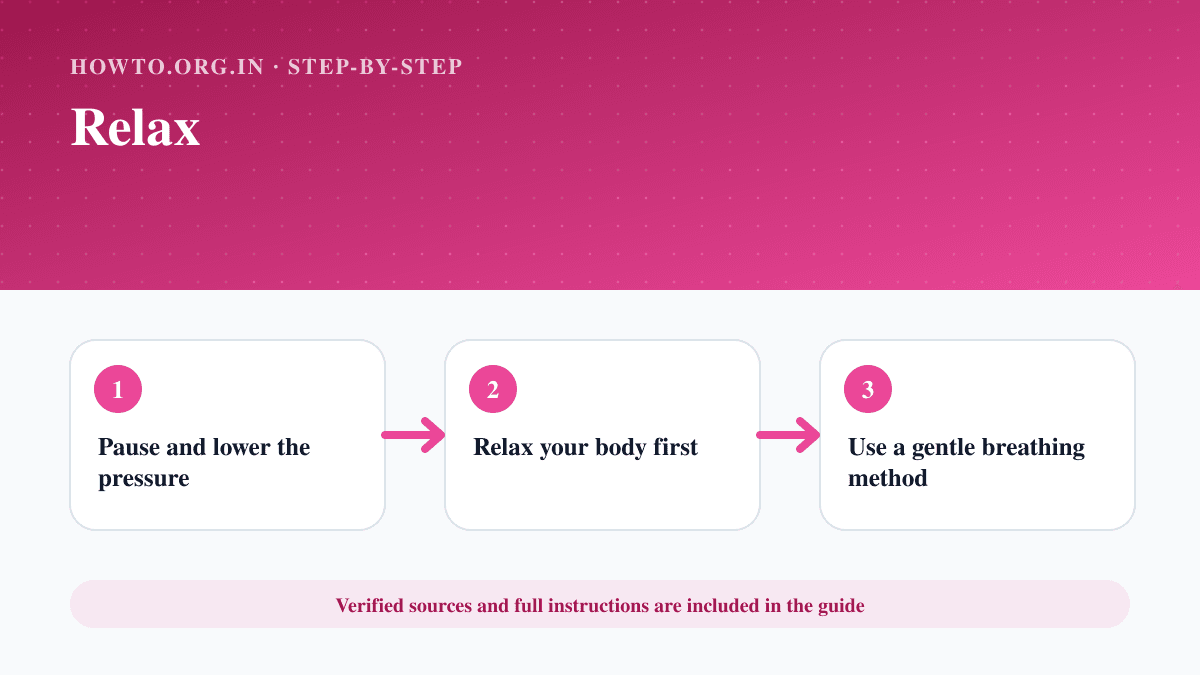
How to Relax
Learn simple ways to relax with a 5-minute routine, breathing method, daily relaxation habits, common mistakes, troubleshooting, and when to get professional help.
How to Be Happy
Learn how to be happy with practical daily habits, relationships, gratitude, movement, boundaries, mistakes, troubleshooting, and when to get help.
Help us improve this guide
Tell us about an outdated instruction, unclear step, broken link or safety concern. Do not include passwords, account numbers, medical records or other sensitive information.