
How to Compost
Learn how to compost at home with greens, browns, moisture, air, bin choices, what not to add, odor fixes, troubleshooting, and FAQs.
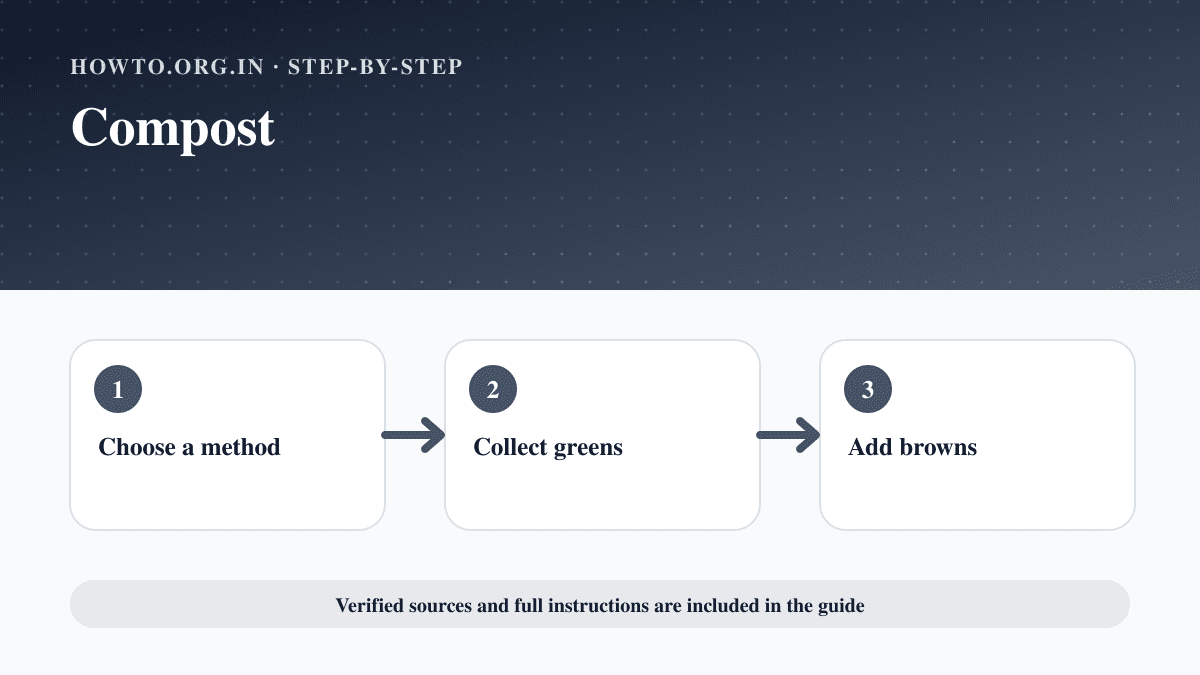
Quick Answer
To compost at home, choose a bin or pile, add a mix of greens like fruit scraps and browns like dry leaves, keep it damp like a wrung sponge, turn or aerate it regularly, avoid meat, grease, and pet waste, and use finished compost when it is dark, crumbly, and earthy-smelling.
Composting Supplies
- Compost bin, tumbler, pile, or drop-off container
- Green materials
- Brown materials
- Water source
- Garden fork or aerator
- Kitchen scrap container
- Gloves
Safety Precautions
- Check local rules for backyard composting and food waste pickup.
- Do not add meat, bones, dairy, grease, diseased plants, or pet waste to a basic home compost pile.
- Keep bins managed to reduce pests and odors.
- Wear gloves and wash hands after handling compost.
Step-by-Step Instructions
- Step 1
Choose a method
Use backyard bin, tumbler, worm bin, municipal drop-off, or curbside composting depending on space and rules.
- Step 2
Collect greens
Add fruit and vegetable scraps, coffee grounds, tea leaves, and fresh plant trimmings.
- Step 3
Add browns
Mix in dry leaves, shredded paper, cardboard, straw, or small twigs.
- Step 4
Balance the pile
Use more browns than greens to reduce odor and sogginess.
- Step 5
Keep it moist
Aim for damp, not dripping wet. Add water or dry browns as needed.
- Step 6
Aerate regularly
Turn the pile or use a tumbler so oxygen reaches decomposing material.
- Step 7
Harvest finished compost
Use it when it is dark, crumbly, and no longer resembles food scraps.
Practical Example
Example: You keep a small kitchen bin for vegetable peels and coffee grounds, then add them to an outdoor bin with dry leaves and shredded cardboard.
Common Mistakes
- Too many food scraps
- Not enough browns
- Pile too wet
- Never turning it
- Adding meat or grease
- Letting scraps sit exposed
- Using compost before it is finished
Troubleshooting
The compost smells bad
Add dry browns, turn it, and avoid meat, dairy, and grease.
The pile is dry and slow
Add water and more green material, then mix.
Pests appear
Bury food scraps, add browns on top, secure the bin, and avoid prohibited foods.
Nothing is breaking down
Chop large pieces smaller, balance greens and browns, add moisture, and aerate.
Helpful Internal Links
FAQs
What are greens and browns in compost?
Greens are nitrogen-rich materials like food scraps; browns are carbon-rich materials like dry leaves and paper.
Can I compost in an apartment?
Yes, with a worm bin, small sealed system, municipal drop-off, or curbside service if available.
Can I compost meat or dairy?
Avoid them in basic home compost because they can smell and attract pests.
How do I know compost is ready?
It should be dark, crumbly, earthy-smelling, and mostly unrecognizable from the original scraps.
Related Guides
How to Start a Garden
Learn how to start a garden with site choice, sunlight, soil, beginner plants, watering, mulch, mistakes, troubleshooting, and FAQs.
How to Plant a Tree
Learn how to plant a tree with site choice, root flare, hole depth, watering, mulch, staking, common mistakes, troubleshooting, and FAQs.
How to Get Rid of Weeds
Learn how to get rid of weeds with pulling, mulching, mowing, targeted treatments, prevention, safety notes, mistakes, troubleshooting, and FAQs.
Help us improve this guide
Tell us about an outdated instruction, unclear step, broken link or safety concern. Do not include passwords, account numbers, medical records or other sensitive information.