
How to Fix a Sagging Door
Learn how to fix a sagging door by checking hinges, tightening screws, adding longer screws, adjusting shims, checking strike plate, and troubleshooting.
Quick Answer
To fix a sagging door, inspect where it rubs, tighten all hinge screws, replace loose top-hinge screws with longer screws that reach the framing, check whether hinge leaves are bent or recessed, adjust the strike plate if needed, and only plane or sand the door after hinge alignment fixes fail.
Tools Required
- Screwdriver or drill-driver
- Longer hinge screws
- Level
- Shims or cardboard if needed
- Pencil
- Utility knife
- Wood filler for stripped holes
Safety Precautions
- Support heavy doors before removing hinge screws.
- Do not remove all hinges at once unless you are taking the door down safely.
- Keep fingers clear of hinge pinch points.
- Use eye protection when drilling.
- Be cautious with exterior security doors.
Step-by-Step Instructions
- Step 1
Find where the door rubs
Look for tight gaps at the top latch side, floor, or frame.
- Step 2
Check hinge screws
Tighten screws on the door side and jamb side, especially the top hinge.
- Step 3
Replace loose screws
Use longer screws in the top hinge jamb side to pull the door back toward the framing.
- Step 4
Check stripped holes
If screws spin, repair the hole with wood filler or wood plugs before reinstalling.
- Step 5
Inspect hinge position
Bent hinges or recessed hinge mortises can cause alignment problems.
- Step 6
Test the swing
Open and close the door after each adjustment instead of changing everything at once.
- Step 7
Adjust strike plate if needed
If the latch misses slightly after the door is aligned, reposition or file the strike plate carefully.
- Step 8
Plane only as a last step
Remove wood only after confirming the problem is not hinge sag or seasonal swelling.
Practical Example
Example: A bedroom door scrapes the top corner. You tighten the top hinge, replace one short jamb screw with a 3-inch screw, and the gap evens out enough for the latch to close.
Common Mistakes
- Planing the door before tightening hinges
- Using short replacement screws
- Removing all hinge screws at once
- Ignoring stripped screw holes
- Over-tightening until the hinge bends
- Forgetting seasonal humidity swelling
Troubleshooting
Screws will not tighten
The holes may be stripped. Fill or plug them, then reinstall screws.
Door still rubs after hinge screws
Check hinge mortises, frame movement, floor clearance, and seasonal swelling.
Latch misses the strike plate
Mark the latch position and adjust the strike plate slightly.
Exterior door is sagging badly
Consider professional help because security, weather sealing, and frame movement may be involved.
Helpful Internal Links
FAQs
Why do doors sag?
Common causes include loose hinge screws, stripped holes, heavy doors, bent hinges, frame movement, or humidity.
Can longer screws fix a sagging door?
Often yes, especially in the top hinge when the screws reach solid framing.
Should I sand or plane the door?
Only after checking hinge and frame alignment, because removing wood is harder to undo.
When should I call a pro?
Call for exterior security doors, major frame movement, cracked jambs, or heavy doors you cannot support safely.
Related Guides
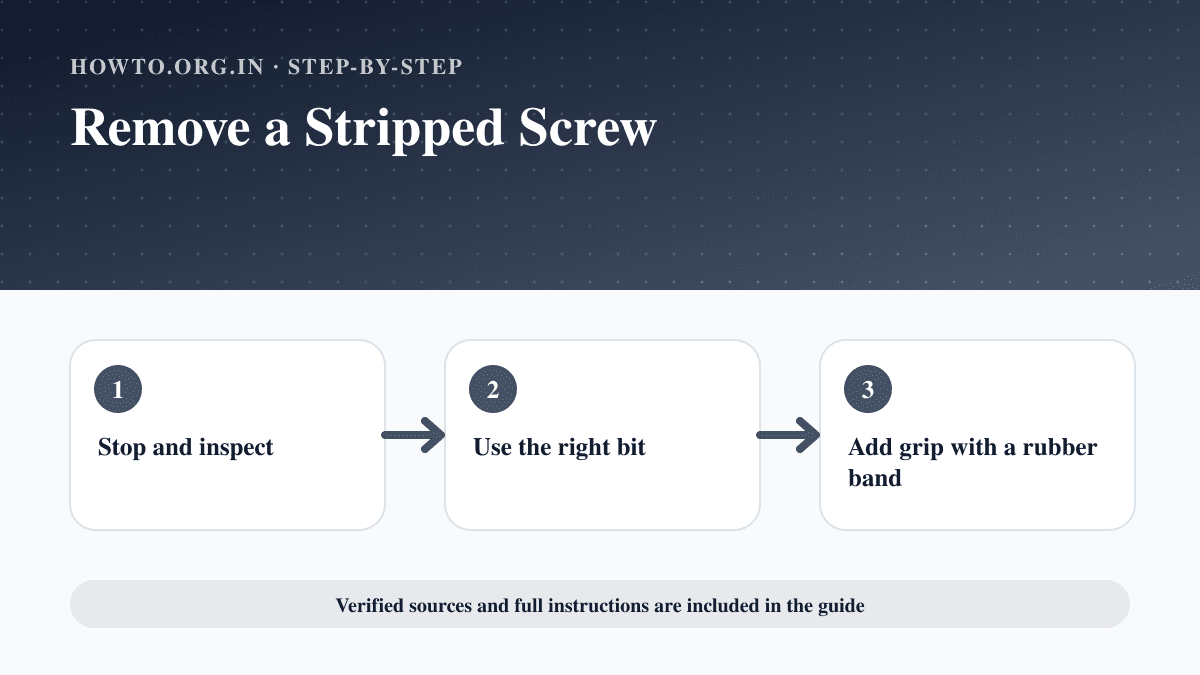
How to Remove a Stripped Screw
Learn how to remove a stripped screw with rubber band grip, larger bit, pliers, slot cutting, screw extractor, safety tips, mistakes, and FAQs.
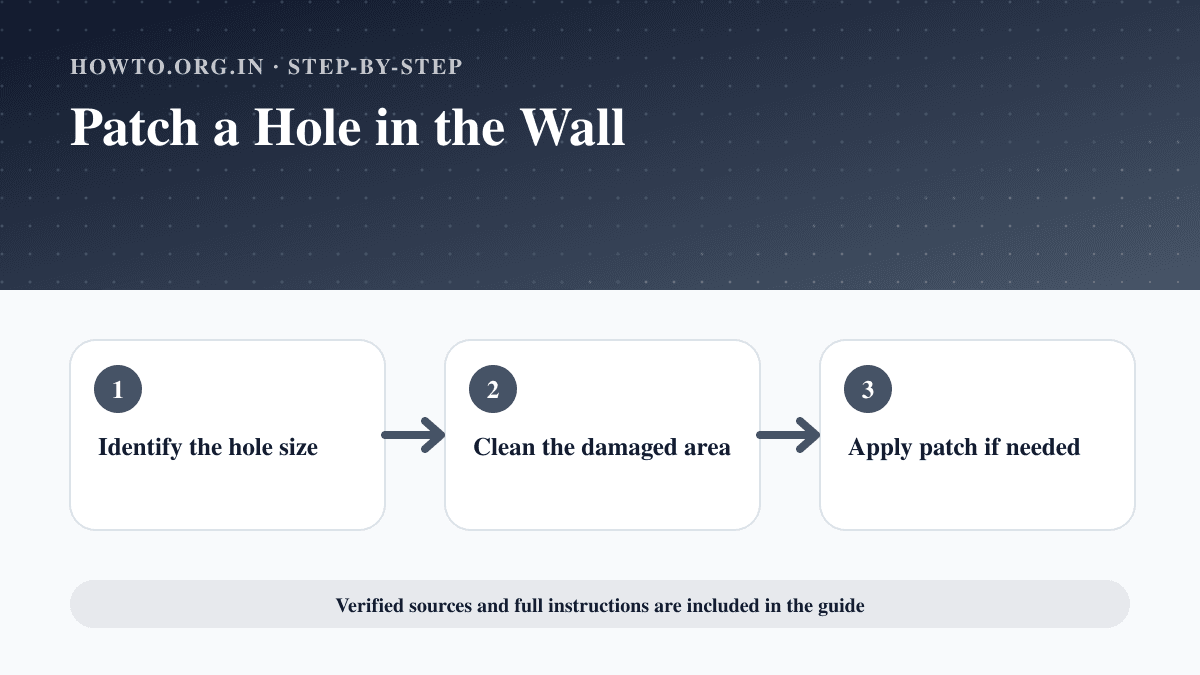
How to Patch a Hole in the Wall
Learn how to patch small and medium wall holes with spackle or a drywall patch, sand, prime, paint, avoid mistakes, and troubleshoot visible repairs.
How to Fix Squeaky Door
Learn how to fix a squeaky door by identifying hinge noise, cleaning pins, lubricating, tightening screws, troubleshooting, and avoiding mistakes.
Help us improve this guide
Tell us about an outdated instruction, unclear step, broken link or safety concern. Do not include passwords, account numbers, medical records or other sensitive information.