
How to Patch a Hole in the Wall
Learn how to patch small and medium wall holes with spackle or a drywall patch, sand, prime, paint, avoid mistakes, and troubleshoot visible repairs.
Quick Answer
To patch a hole in the wall, clean loose edges, choose spackle for tiny holes or a mesh/drywall patch for larger holes, apply compound in thin layers, let it dry, sand smooth, prime the repaired area, paint to match the wall, and feather the paint outward so the patch blends.
Tools and Materials
- Spackle or joint compound
- Putty knife
- Fine-grit sandpaper
- Self-adhesive mesh patch for larger holes
- Utility knife
- Primer
- Matching paint
- Dust mask
Safety Precautions
- Wear a dust mask while sanding.
- Check for wires or plumbing before cutting into a wall.
- If the wall may contain lead paint, get professional guidance before sanding.
- Use a ladder safely for high repairs.
Step-by-Step Instructions
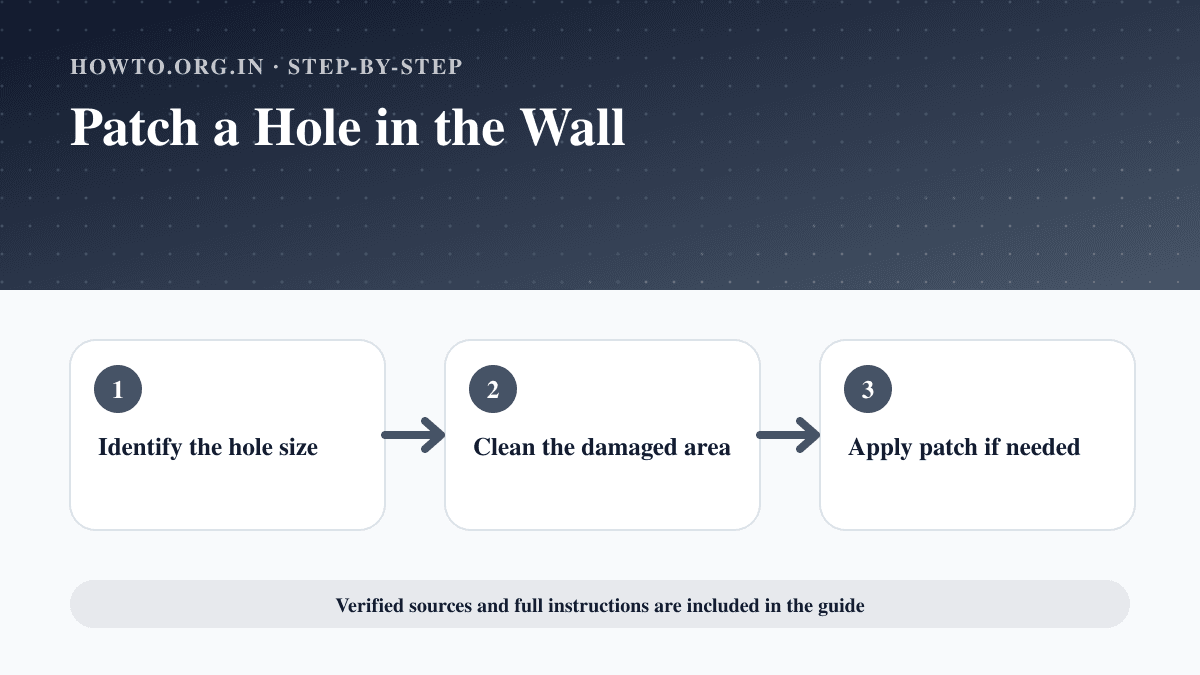
- Step 1
Identify the hole size
Small nail holes need spackle. Larger holes may need a mesh patch or drywall piece.
- Step 2
Clean the damaged area
Remove loose paper, crumbling drywall, and raised edges with a utility knife.
- Step 3
Apply patch if needed
For medium holes, center a self-adhesive mesh patch over the opening.
- Step 4
Spread compound
Use a putty knife to apply compound over the hole or patch. Feather the edges outward.
- Step 5
Let it dry fully
Follow the product drying time. Thick patches may need more time.
- Step 6
Apply a second thin coat
Add another coat if the patch shrinks or the mesh still shows.
- Step 7
Sand smooth
Sand lightly until the repair blends with the wall. Do not oversand into the patch.
- Step 8
Prime and paint
Prime the patch first, then paint. Feather paint outward to reduce a visible spot.
Practical Example
Example: A doorknob leaves a palm-sized dent in drywall. You trim loose paper, apply a mesh patch, spread compound in two thin coats, sand, prime, and repaint the area.
Common Mistakes
- Using too much compound at once
- Painting before the patch dries
- Skipping primer
- Oversanding
- Ignoring texture differences
- Cutting into walls without checking behind them
Troubleshooting
The patch is visible after painting
Prime the patch and repaint a larger area, feathering outward. Texture differences may need matching.
Compound cracked
Use thinner coats and let each coat dry fully.
Mesh still shows
Apply another thin coat of compound and feather wider.
The hole is very large
Use a drywall backing and patch piece or hire a pro if framing, wires, or plumbing are involved.
Helpful Internal Links
FAQs
Can I patch a wall hole without a kit?
Tiny holes can be filled with spackle. Medium holes are easier with a mesh patch kit.
Do I need primer after patching drywall?
Yes. Primer helps the repaired spot absorb paint more evenly.
How long does spackle take to dry?
Drying time depends on product and thickness. Follow the label and wait until it is fully dry before sanding.
Can I patch plaster the same way?
Small holes may be similar, but older plaster can need different repair methods.
Related Guides
How to Paint a Room
Learn how to paint a room with tools, prep steps, wall repair, taping, cutting in, rolling, drying, second coat tips, mistakes, troubleshooting, and FAQs.
How to Patch a Hole in Drywall
Learn how to patch small and medium drywall holes with mesh, joint compound, sanding, priming, painting, mistakes, troubleshooting, and FAQs.
How to Mount TV on Wall
Learn how to mount a TV on the wall safely with stud finding, mount choice, drilling, leveling, cable planning, mistakes, troubleshooting, and FAQs.
Help us improve this guide
Tell us about an outdated instruction, unclear step, broken link or safety concern. Do not include passwords, account numbers, medical records or other sensitive information.