
How to Remove a Stripped Screw
Learn how to remove a stripped screw with rubber band grip, larger bit, pliers, slot cutting, screw extractor, safety tips, mistakes, and FAQs.
Quick Answer
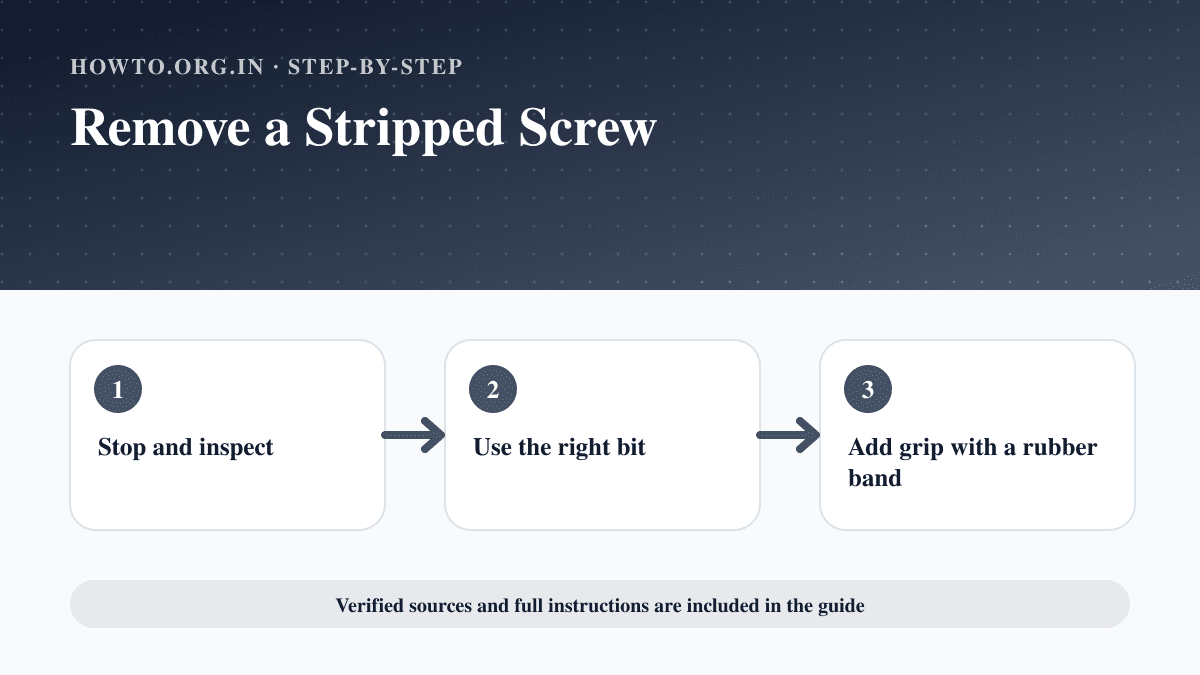
To remove a stripped screw, stop before damaging it more, press the correct driver firmly into the head, try a rubber band for grip, use a slightly larger bit, grip the head with locking pliers if exposed, cut a new slot for a flathead if safe, or use a screw extractor kit for stubborn screws.
Tools Required
- Correct screwdriver or bit set
- Rubber band
- Locking pliers
- Manual screwdriver
- Drill with extractor bit if needed
- Eye protection
- Penetrating oil for rusty screws
Safety Precautions
- Wear eye protection when drilling or cutting.
- Do not force a slipping bit because it can worsen the damage.
- Secure the object before applying torque.
- Use caution around electronics, plumbing, or finished surfaces.
- Stop and get help for valuable or delicate items.
Step-by-Step Instructions
- Step 1
Stop and inspect
Check the screw type, material, depth, and whether the head is raised or flush.
- Step 2
Use the right bit
Try the correct size bit with firm downward pressure and slow turning.
- Step 3
Add grip with a rubber band
Place a wide rubber band over the screw head and press the driver through it.
- Step 4
Try a larger driver
A slightly larger bit may bite into the damaged head.
- Step 5
Use pliers if exposed
Grip the screw head with locking pliers and turn slowly.
- Step 6
Cut a new slot
If safe, cut a shallow slot and use a flathead screwdriver.
- Step 7
Use a screw extractor
Drill as directed by the extractor kit, then reverse the extractor to remove the screw.
- Step 8
Replace the screw
Use a new screw with the correct head and size.
Practical Example
Example: A cabinet hinge screw strips. You stop using the drill, press a rubber band over the head, use a hand screwdriver with steady pressure, and remove it without damaging the hinge.
Common Mistakes
- Using the wrong bit size
- Running a drill too fast
- Skipping eye protection
- Pressing at an angle
- Damaging the surrounding surface
- Reusing the stripped screw
Troubleshooting
The bit keeps slipping
Use more downward pressure, a manual screwdriver, rubber band, or extractor rather than spinning faster.
The screw is rusty
Apply penetrating oil and wait before trying again.
The head broke off
Use pliers on the exposed shank if possible or drill/extract carefully.
The screw is in electronics
Avoid aggressive drilling unless you know the device layout and risks.
Helpful Internal Links
FAQs
Does the rubber band trick work?
It can help with lightly stripped screws by adding friction, but badly damaged screws may need pliers or an extractor.
Should I use a drill?
Use a drill carefully and slowly. A hand screwdriver often gives better control at first.
What is a screw extractor?
It is a tool designed to bite into a damaged screw so it can be turned out.
How do I prevent stripped screws?
Use the correct bit, keep it straight, apply firm pressure, and avoid over-tightening.
Related Guides
How to Fix a Sagging Door
Learn how to fix a sagging door by checking hinges, tightening screws, adding longer screws, adjusting shims, checking strike plate, and troubleshooting.
How to Patch a Hole in the Wall
Learn how to patch small and medium wall holes with spackle or a drywall patch, sand, prime, paint, avoid mistakes, and troubleshoot visible repairs.
How to Get a Stripped Screw Out
Learn how to get a stripped screw out with rubber band grip, pliers, screw extractor, safety tips, common mistakes, troubleshooting, and FAQs.
Help us improve this guide
Tell us about an outdated instruction, unclear step, broken link or safety concern. Do not include passwords, account numbers, medical records or other sensitive information.