
How to Get Rid of Ants
Learn how to get rid of ants by finding trails, removing food sources, sealing entry points, using bait safely, avoiding mistakes, and knowing when to call a pro.
Quick Answer
To get rid of ants, follow the trail to find where they enter, clean food and sticky residue, store food tightly, remove water sources, seal gaps, wipe trails, use ant bait where children and pets cannot reach it, and call pest control for fire ants, carpenter ants, or large recurring infestations.
Supplies Required
- Flashlight
- Soap or mild cleaner
- Sealed food containers
- Caulk or weatherstripping
- Ant bait stations
- Gloves
- Trash bags
Safety Precautions
- Follow all pesticide label directions.
- Keep bait and sprays away from children, pets, food, dishes, and food-prep surfaces.
- Do not mix pest-control chemicals.
- For fire ants, carpenter ants, or severe infestations, use a licensed pest professional.
Step-by-Step Instructions
- Step 1
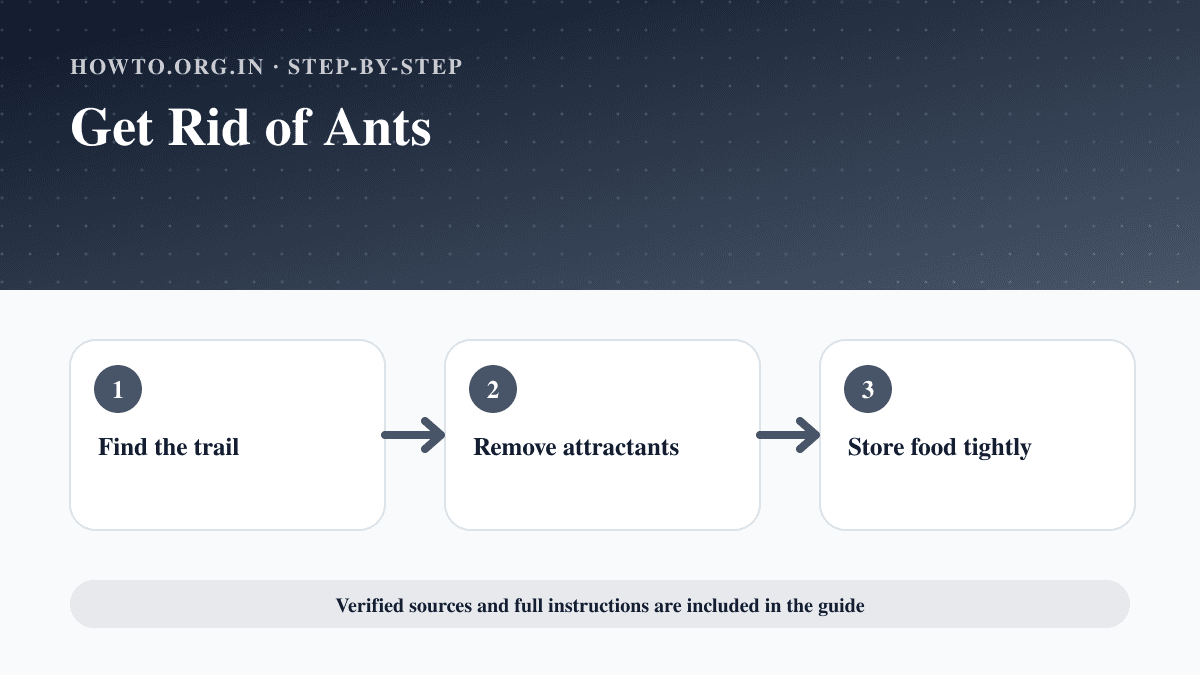
Find the trail
Watch where ants travel so you can identify food sources and entry points.
- Step 2
Remove attractants
Clean crumbs, sugar, grease, pet food, trash, and sticky spills.
- Step 3
Store food tightly
Move pantry items into sealed containers and keep counters dry.
- Step 4
Wipe scent trails
Use soapy water or a mild cleaner on trails so ants have a harder time following them.
- Step 5
Seal entry points
Caulk small gaps around windows, doors, pipes, baseboards, and utility lines.
- Step 6
Use bait, not random spraying
Place bait near trails according to the label so ants carry it back to the colony.
- Step 7
Monitor and repeat
Keep cleaning and baiting until activity stops, then maintain prevention habits.
Practical Example
Example: Ants are crossing the kitchen counter from a window gap. You clean the trail, seal the gap, store sugar in a sealed container, and place bait behind the appliance where pets cannot reach it.
Common Mistakes
- Spraying every ant before bait can work
- Leaving pet food out overnight
- Ignoring water leaks
- Using bait where children can reach it
- Assuming one cleaning solves the colony
- Treating carpenter ants as a small nuisance
Troubleshooting
Ants ignore the bait
Try a different bait type and remove competing food sources.
Ants return after a week
Check for unsealed entry points, moisture, and hidden food sources.
Large black ants appear indoors
Consider carpenter ants and call a professional if wood damage or recurring activity appears.
Ants are outdoors near children or pets
Avoid unsafe chemical use and choose labeled outdoor products or professional help.
When to Get Help
- You suspect carpenter ants, fire ants, or structural damage.
- Infestations keep returning despite cleaning and sealing.
- You cannot safely place bait away from children or pets.
- Ants are widespread across several rooms.
Helpful Internal Links
FAQs
What attracts ants indoors?
Food, sugar, grease, water, pet food, trash, and easy entry points commonly attract ants.
Is ant bait better than spray?
Often yes, because bait can reach the colony while random spray may only kill visible ants.
Can vinegar get rid of ants?
It may disrupt trails, but it usually does not remove the colony by itself.
When should I call pest control?
Call for fire ants, carpenter ants, severe infestations, or repeated failures.
Related Guides
How to Get Rid of Weeds
Learn how to get rid of weeds with pulling, mulching, mowing, targeted treatments, prevention, safety notes, mistakes, troubleshooting, and FAQs.
How to Clean a Microwave
Learn how to clean a microwave with water, vinegar or lemon, dish soap, and safe wiping steps. Includes burnt smell fixes, mistakes, troubleshooting, and FAQs.
How to Clean an Oven
Learn how to clean an oven safely with manual cleaning steps, racks, glass door, self-cleaning cautions, mistakes to avoid, troubleshooting, and FAQs.
Help us improve this guide
Tell us about an outdated instruction, unclear step, broken link or safety concern. Do not include passwords, account numbers, medical records or other sensitive information.