
How to Swim
Learn how to swim safely as a beginner with water comfort, floating, kicking, breathing, basic strokes, mistakes, troubleshooting, and when to get lessons.
Quick Answer
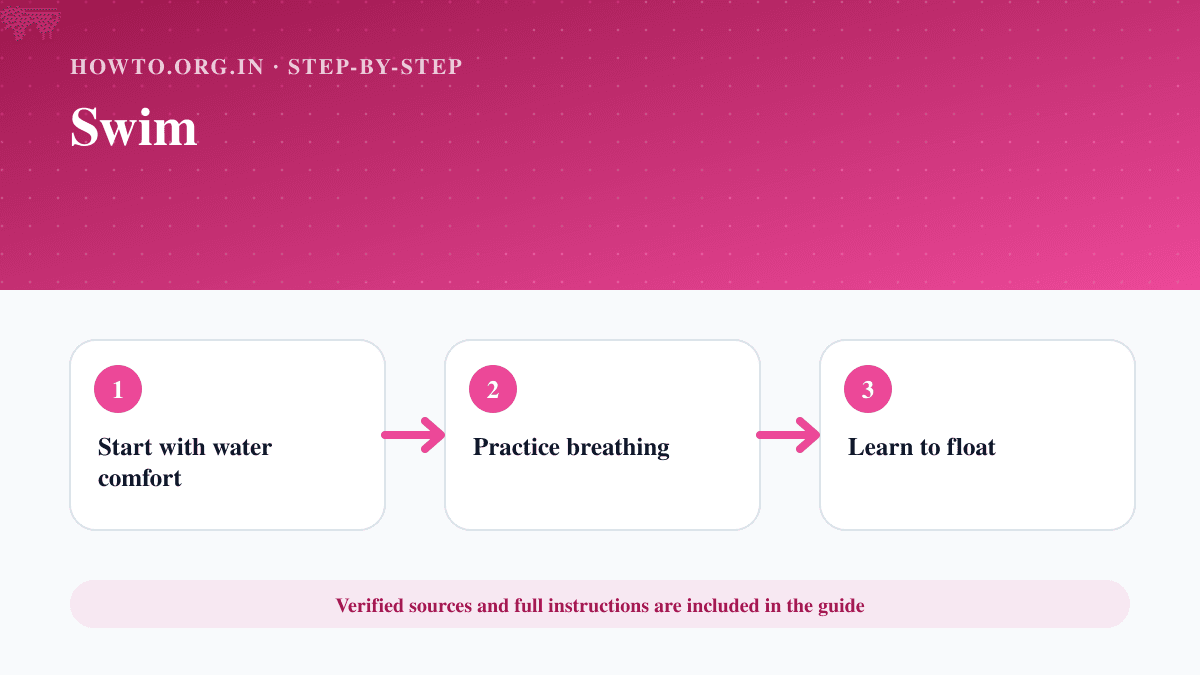
To learn to swim, start in shallow supervised water, practice relaxing and breathing, learn to float, kick while holding the wall or a board, practice short glides, add arm movements, and take lessons from a qualified instructor if possible. Never practice alone or in deep/open water as a beginner.
What You Need
- Supervised pool or safe shallow water
- Qualified instructor or strong swimmer nearby
- Swimsuit
- Goggles if helpful
- Kickboard if available
- Patience and short practice sessions
Safety Precautions
- Never swim alone. Beginners should practice with a qualified instructor in supervised, shallow water.
- A lifeguard does not replace close, constant adult supervision of children in or near water.
- Use a properly fitted, approved life jacket where conditions or ability call for one. Do not treat inflatable arm bands or other float toys as safety devices.
- Avoid alcohol before or during swimming and while supervising anyone in the water.
- Do not hyperventilate or attempt prolonged underwater breath-holding; either can lead to loss of consciousness and drowning.
- Learn in a pool before attempting open water, where currents, waves, weather, rocks and poor visibility add risk.
Step-by-Step Instructions
- Step 1
Start with water comfort
Stand in shallow water, hold the wall, and practice putting your face in the water while exhaling slowly.
- Step 2
Practice breathing
Blow bubbles underwater and turn your head to inhale. Keep the rhythm calm and slow.
- Step 3
Learn to float
Practice front and back floats with support. Keep your body relaxed and spread out.
- Step 4
Add kicking
Hold the wall or a kickboard and practice small steady kicks from the hips.
- Step 5
Practice gliding
Push gently from the wall and glide a short distance in shallow water.
- Step 6
Add arms
Use simple arm pulls while keeping your body long and breathing controlled.
- Step 7
Learn to recover
Practice moving from floating to standing so you can stop safely.
- Step 8
Take lessons for progress
A qualified instructor can correct technique and teach water safety faster.
Practical Example
Example: In a lifeguarded shallow pool, you spend 10 minutes practicing bubbles, 10 minutes floating with support, and 10 minutes kicking with a board. You stop before fatigue and repeat twice a week.
Common Mistakes
- Practicing alone
- Holding your breath instead of exhaling underwater
- Kicking from the knees only
- Tensing the body while floating
- Moving to deep water too soon
- Trying open water before pool basics
Troubleshooting
I sink when floating
Relax your neck and hips, spread your body, and practice with support. Body position matters more than force.
I panic when my face goes underwater
Practice only in shallow water and start with quick bubble exercises. Consider lessons.
I get tired quickly
Slow down, breathe better, and practice shorter sets with rest.
I cannot coordinate arms and breathing
Practice breathing, kicking, and arms separately before combining them.
When to Get Help
- You are afraid of water or panic easily.
- A child is learning to swim.
- You plan to swim in open water.
- You cannot float or recover to standing safely.
- You have a medical condition that may affect swimming safety.
Sources and Review
Reviewed by Pramod Tiwari, Editor; official-source verification on 2026-08-08.
- Summer Swim Safety — Centers for Disease Control and Prevention
- Preventing Drowning — Centers for Disease Control and Prevention
Helpful Internal Links
FAQs
Can adults learn to swim?
Yes. Adults can learn with patient practice and qualified instruction.
How long does it take to learn swimming?
It varies by comfort, practice frequency, instruction, and goals.
Should beginners use floaties?
Floatation aids can help drills, but they do not replace supervised skill practice.
Is open water safe for beginners?
Beginners should learn in supervised pool conditions before open water.
Related Guides
How to Be Confident
Learn how to be more confident with small goals, preparation, body language, self-talk, practice, mistakes, troubleshooting, and when to seek help.
How to Relax
Learn simple ways to relax with a 5-minute routine, breathing method, daily relaxation habits, common mistakes, troubleshooting, and when to get professional help.
How to Build a Sleep Hygiene Routine
Create a consistent sleep routine using regular timing, morning light, a calm wind-down and safer bedroom habits.
Help us improve this guide
Tell us about an outdated instruction, unclear step, broken link or safety concern. Do not include passwords, account numbers, medical records or other sensitive information.