
How to Build a Sleep Hygiene Routine
Create a consistent sleep routine using regular timing, morning light, a calm wind-down and safer bedroom habits.
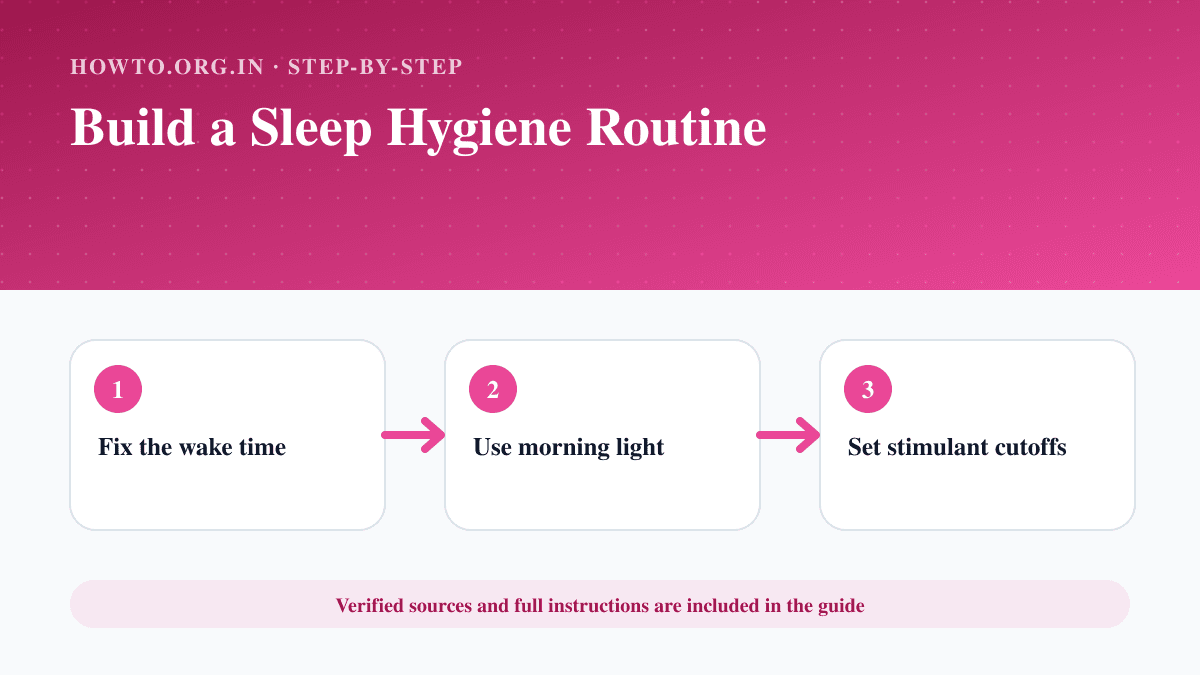
Quick Answer
Keep a consistent wake time, get daylight and activity during the day, avoid late caffeine and heavy meals, create a repeatable wind-down, make the bedroom dark and comfortable, and seek medical advice for persistent insomnia, loud snoring, breathing pauses or severe daytime sleepiness.
What You Need
- Consistent wake-time target
- Simple wind-down activity
- Dark and comfortable sleep environment
Safety Precautions
- Do not drive when dangerously sleepy.
- Seek urgent help for severe breathing problems or sudden neurological symptoms.
- Discuss persistent sleep problems, medication effects or possible sleep apnoea with a clinician.
- Do not stop prescribed medicine without advice.
Step-by-Step Instructions
- Step 1
Fix the wake time
Choose a realistic daily wake time and keep it reasonably consistent.
- Step 2
Use morning light
Get daylight soon after waking and include suitable daytime activity.
- Step 3
Set stimulant cutoffs
Avoid caffeine, nicotine, alcohol and heavy meals close to bedtime as appropriate.
- Step 4
Create a wind-down
Repeat a calm low-light routine and reduce stimulating work or screens.
- Step 5
Prepare the bedroom
Make it quiet, dark, comfortable and used mainly for sleep.
- Step 6
Track and escalate
Record patterns for two weeks and seek care when symptoms persist or red flags appear.
Practical Example
A person keeps a 7:00 a.m. wake time, walks outside after breakfast, stops caffeine after lunch and reads quietly before bed.
Common Mistakes
- Sleeping in widely after a poor night
- Using alcohol as a sleep aid
- Watching the clock repeatedly
- Ignoring loud snoring or breathing pauses
Troubleshooting
You cannot fall asleep after a long time
Leave the bed for a quiet dim-light activity and return when sleepy, while keeping the wake time.
Daytime sleepiness remains severe
Contact a qualified clinician and avoid driving or hazardous work when sleepy.
Sources and Review
Reviewed by Pramod Tiwari, Editor; official-source verification on 2026-08-08.
- About Sleep — Centers for Disease Control and Prevention
- Healthy Sleep Habits — National Heart, Lung, and Blood Institute
Helpful Internal Links
FAQs
How quickly will a routine work?
Consistency can help, but persistent insomnia or sleep-disorder symptoms need professional assessment.
Should I use my phone in bed?
Bright, engaging content can delay wind-down; reduce it or use a calmer alternative.
When should I get medical help?
Seek help for persistent problems, breathing pauses, loud snoring with sleepiness or major daytime impairment.
Related Guides
How to Relax
Learn simple ways to relax with a 5-minute routine, breathing method, daily relaxation habits, common mistakes, troubleshooting, and when to get professional help.
How to Swim
Learn how to swim safely as a beginner with water comfort, floating, kicking, breathing, basic strokes, mistakes, troubleshooting, and when to get lessons.
How to Build a Bookshelf
Learn how to build a bookshelf with measurements, lumber, cuts, assembly, squaring, sanding, anchoring, mistakes, troubleshooting, and FAQs.
Help us improve this guide
Tell us about an outdated instruction, unclear step, broken link or safety concern. Do not include passwords, account numbers, medical records or other sensitive information.