
How to Build an Emergency Fund
Set an emergency-fund target, open a safe accessible account, automate contributions and define when the money can be used.
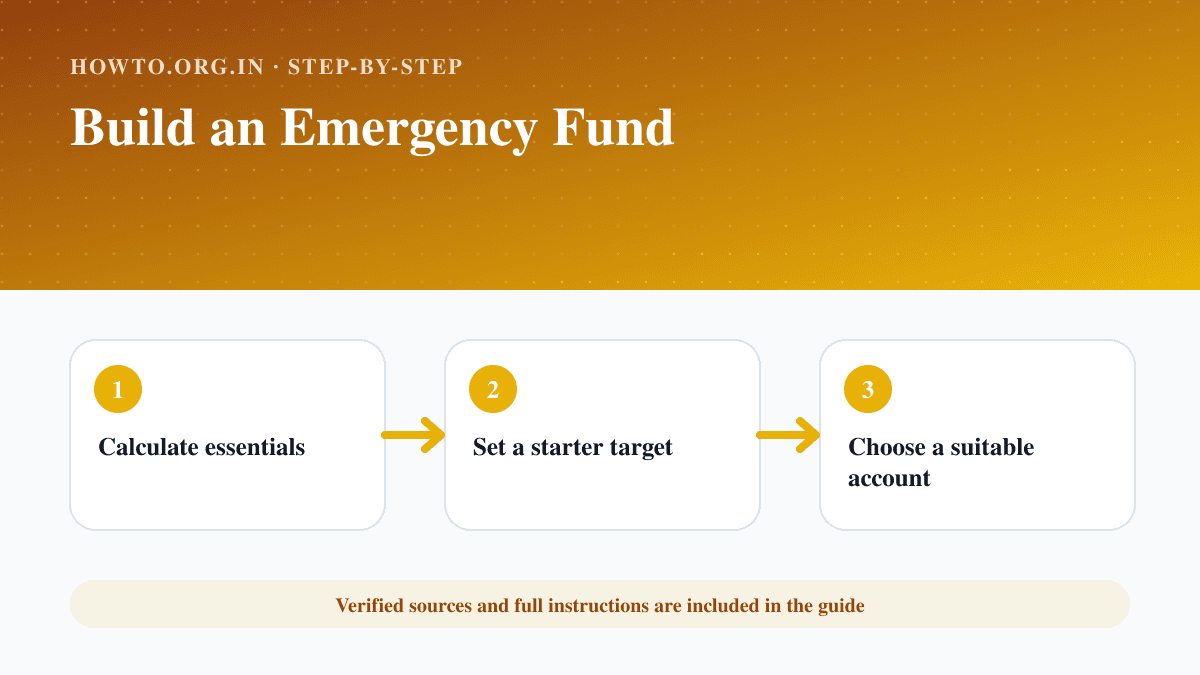
Quick Answer
Estimate essential monthly expenses, choose a starter target you can reach, keep the money in a separate low-risk account that remains accessible, automate a contribution after each income payment, direct windfalls to the goal and create written rules for genuine emergencies.
What You Need
- Essential-expense estimate
- Separate accessible savings account
- Realistic recurring contribution
Safety Precautions
- This is general education, not personal financial advice.
- Do not invest emergency cash in volatile assets.
- Consider account access, deposit protection, fees and tax treatment.
- Prioritise urgent high-cost debt or essential insurance with qualified guidance.
Step-by-Step Instructions
- Step 1
Calculate essentials
Total housing, food, utilities, transport, insurance and minimum debt payments.
- Step 2
Set a starter target
Begin with a manageable buffer before working toward several months of essentials.
- Step 3
Choose a suitable account
Keep the fund safe, separate, accessible and low-fee.
- Step 4
Automate contributions
Schedule a transfer immediately after income arrives.
- Step 5
Use irregular income deliberately
Send part of bonuses, refunds or gifts to the fund.
- Step 6
Define and refill
Write what counts as an emergency and rebuild after a withdrawal.
Practical Example
A household with ₹30,000 of essential monthly costs first targets ₹15,000, automates ₹2,000 monthly and later increases the target after clearing expensive debt.
Common Mistakes
- Setting an impossible first target
- Keeping the fund in volatile investments
- Mixing it with everyday spending
- Using it for predictable annual costs
Troubleshooting
There is no room in the budget
Start with a very small automatic amount and review one recurring expense at a time.
The fund keeps being used
Separate predictable sinking funds from true emergencies and remove easy spending access.
Sources and Review
Reviewed by Pramod Tiwari, Editor; official-source verification on 2026-08-08.
- Financial education resources — Reserve Bank of India
Helpful Internal Links
FAQs
How large should the fund be?
It depends on essential costs, income stability and household risks; build from a starter buffer toward a larger target.
Should I invest it?
Emergency money normally prioritises safety and access over high returns.
What counts as an emergency?
Unexpected essential costs or income loss, not routine or planned purchases.
Related Guides
How to Make a Budget
Learn how to make a personal or household budget with income, expenses, the 50/30/20 rule, zero-based budgeting, a monthly example, mistakes, troubleshooting, and FAQs.
How to Save Money
Learn how to save money with expense tracking, savings goals, automatic transfers, bill review, spending limits, mistakes to avoid, troubleshooting, and FAQs.
How to Build a Bookshelf
Learn how to build a bookshelf with measurements, lumber, cuts, assembly, squaring, sanding, anchoring, mistakes, troubleshooting, and FAQs.
Help us improve this guide
Tell us about an outdated instruction, unclear step, broken link or safety concern. Do not include passwords, account numbers, medical records or other sensitive information.