
How to Change Oil
Learn how to change engine oil safely at home, choose the right oil, replace the filter, check for leaks, dispose of used oil, and avoid common mistakes.
Quick Answer
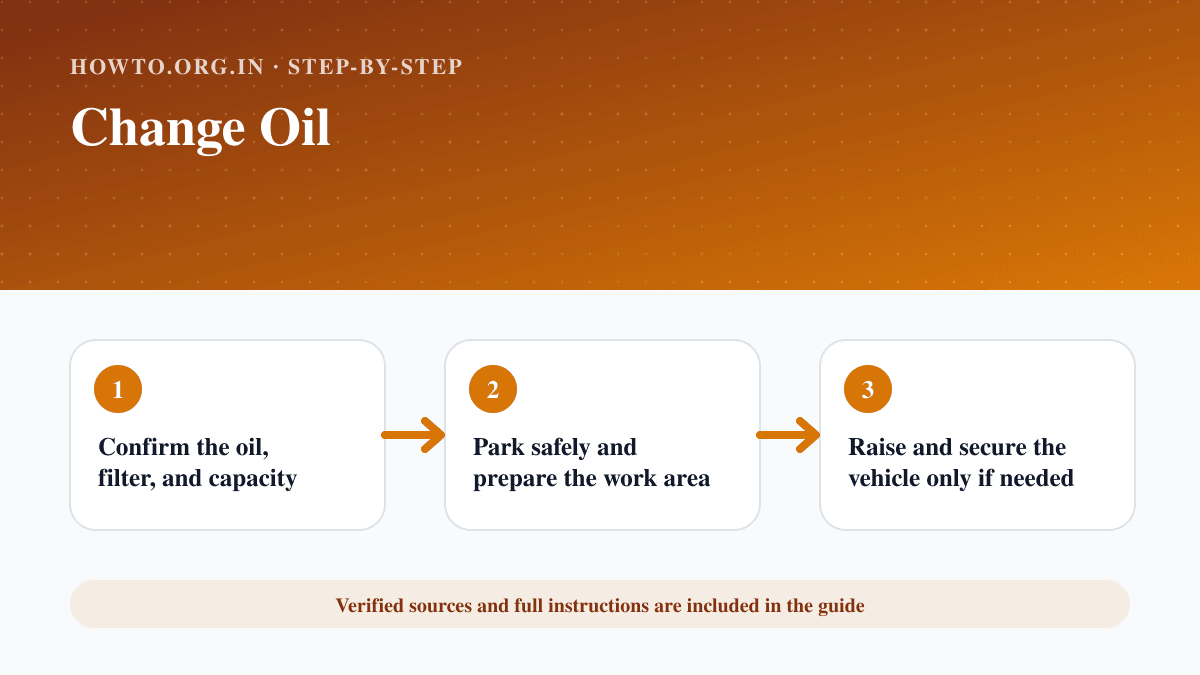
To change oil, park on level ground, check your owner’s manual for the correct oil and filter, secure the vehicle with ramps or jack stands if needed, drain the old oil into a pan, replace the drain plug and oil filter, add the correct amount of new oil, run the engine briefly, check for leaks, recheck the dipstick, and recycle the used oil and filter properly.
Tools and Materials Required
- Correct engine oil type, viscosity, and quantity from the owner’s manual
- Correct oil filter for your vehicle
- Socket wrench or box-end wrench for the drain plug
- Oil filter wrench if the filter cannot be removed by hand
- Oil drain pan large enough for the full oil capacity
- Funnel for adding new oil
- Gloves, safety glasses, and rags
- Replacement drain-plug washer or crush washer if required
- Ramps or jack stands if extra clearance is needed
- Sealable container for used oil transport
Safety Precautions
- Read your vehicle manual first. Oil type, capacity, filter location, drain-plug torque, and lifting points vary by vehicle.
- Work on a flat, stable surface and set the parking brake before starting.
- Never crawl under a vehicle supported only by a jack. Use ramps or properly placed jack stands if you need clearance.
- Let a hot engine cool before draining oil. Warm oil drains well, but hot oil can burn skin.
- Wear gloves and eye protection because used oil can irritate skin and may splash when the plug or filter is removed.
- Keep children, pets, flames, and ignition sources away from the work area.
- Do not start the engine until the drain plug, oil filter, and oil fill cap are installed correctly.
How to Choose the Right Oil
- Use the oil viscosity listed in the owner’s manual, such as 0W-20, 5W-30, or another manufacturer-specified grade.
- Use the oil specification required by the automaker, not only the viscosity. Some engines require specific synthetic, diesel, turbo, or manufacturer-approved oil standards.
- Check the oil capacity before pouring. Add slightly less than the full amount first, then recheck with the dipstick to avoid overfilling.
- Choose the correct filter by vehicle year, make, model, engine size, and filter type. Cartridge and spin-on filters are not interchangeable.
- If you are unsure about oil type, filter type, or capacity, ask a mechanic or parts professional before starting.
Step-by-Step Instructions
- Step 1
Confirm the oil, filter, and capacity
Open the owner’s manual or a trusted vehicle-specific service reference. Write down the oil viscosity, required specification, oil capacity, filter part number, drain-plug washer requirement, and any torque specs.
- Step 2
Park safely and prepare the work area
Park on level ground, set the parking brake, and let the engine cool until it is warm but not hot. Place cardboard under the engine area and set your drain pan, tools, rags, and new parts within reach.
- Step 3
Raise and secure the vehicle only if needed
If you cannot reach the drain plug and filter safely, use ramps or jack stands on approved lift points. Do not rely on a jack alone, and gently rock the vehicle to confirm it is stable before working underneath.
- Step 4
Remove the oil fill cap
Open the hood and remove the oil fill cap. This helps oil drain more smoothly and reminds you not to start the vehicle before refilling.
- Step 5
Position the drain pan and remove the drain plug
Place the pan under the drain plug, allowing for the stream to travel outward at first. Loosen the plug with the correct wrench, then remove it carefully without putting your hand in the oil stream.
- Step 6
Let the old oil drain completely
Wait until the flow slows to an occasional drip. Inspect the drain plug and washer for damage. Replace the washer if the manual requires it or if it looks crushed, cracked, or worn.
- Step 7
Remove the old oil filter
Move the drain pan under the filter because more oil may spill. Remove the filter slowly. Confirm the old rubber gasket came off with the filter so you do not accidentally double-gasket the new filter.
- Step 8
Install the new oil filter
Lightly coat the new filter gasket with fresh oil. Install the filter according to the filter instructions or owner’s manual. Tighten it snugly, but do not overtighten.
- Step 9
Reinstall the drain plug
Wipe the drain area clean, reinstall the plug by hand first to avoid cross-threading, then tighten it to the correct spec if you have a torque wrench. Do not overtighten the plug.
- Step 10
Add new oil gradually
Place a funnel in the oil fill opening and pour in most of the specified capacity. Wait a minute, check the dipstick if your vehicle has one, then add small amounts until the level is near full.
- Step 11
Run the engine and check for leaks
Install the oil cap, start the engine, and let it idle briefly. Do not rev the engine. Turn it off and inspect around the drain plug and filter for leaks from a safe position.
- Step 12
Recheck the oil level
Wait a few minutes for oil to settle, then check the dipstick on level ground. Add small amounts only if needed. The final level should be within the safe range, not above full.
- Step 13
Reset reminders and record the service
Reset the oil-life monitor only if your manual explains how, then record the date, mileage, oil type, oil quantity, and filter used.
How to Dispose of Used Engine Oil Responsibly
- Pour used oil into a clean, sealable container. The empty new-oil bottle usually works well if it has a tight cap.
- Put the used filter in a leakproof bag or container and let it drain into the oil pan first if possible.
- Do not pour used oil into soil, drains, toilets, storm sewers, trash, or regular recycling bins.
- Take used oil and filters to a local auto-parts store, recycling center, service station, or municipal household hazardous waste facility that accepts them.
- Call ahead before visiting because quantity limits, fees, and filter rules vary by location.
- Do not mix used oil with coolant, brake fluid, gasoline, solvents, or water because mixed fluids may be rejected by recyclers.
Practical Example
Example: Your owner’s manual says your car needs 5W-30 full synthetic oil, 4.5 quarts, a specific spin-on filter, and a new drain-plug washer. You park on level ground, use ramps, drain the warm oil, replace the filter and washer, add 4 quarts first, run the engine briefly, then top up carefully until the dipstick reads full.
Common Mistakes
- Using oil viscosity or specification that does not match the owner’s manual
- Crawling under a car supported only by a jack
- Draining hot oil and getting burned
- Forgetting to replace or inspect the drain-plug washer
- Leaving the old oil-filter gasket stuck to the engine
- Overtightening the drain plug or oil filter
- Overfilling the engine with too much oil
- Starting the engine before adding new oil
- Pouring used oil into a drain, soil, or regular trash
Troubleshooting
The drain plug will not loosen
Confirm you are turning the correct direction and using the correct-size socket or wrench. Do not round the bolt. If it will not move with steady pressure, visit a mechanic.
Oil leaks after the change
Turn the engine off. Check whether the drain plug, washer, or filter gasket is seated correctly. If the leak continues, do not drive; have the car inspected.
The dipstick shows too much oil
Do not ignore overfill. Drain a small amount, recheck on level ground, and repeat until the level is within the safe range.
The oil pressure light stays on
Turn the engine off immediately. Check the oil level. If the level is correct and the light remains on, call a mechanic before driving.
The old filter gasket is stuck
Remove the old gasket before installing the new filter. A double gasket can cause a major oil leak shortly after startup.
When to Visit a Mechanic
- You cannot safely lift or access the vehicle.
- You are unsure which oil, filter, drain plug, or torque specification applies to your car.
- The drain plug or filter is stuck, stripped, cross-threaded, or damaged.
- You see metal shavings, coolant-like milky oil, fuel smell, or sludge during the oil change.
- The oil pressure warning light stays on after refilling.
- The vehicle leaks oil after the change or the oil level drops quickly.
- Your vehicle has a covered underbody, cartridge filter, reset procedure, or warranty requirement you are not comfortable handling.
Sources and Review
Reviewed by Pramod Tiwari, Editor; official-source verification on 2026-08-08.
- How Often Should You Change Your Oil? — AAA
- Managing, Reusing, and Recycling Used Oil — United States Environmental Protection Agency
Helpful Internal Links
FAQs
Can beginners change engine oil at home?
Yes, many beginners can change oil safely if they follow the owner’s manual, use the correct oil and filter, secure the vehicle properly, and stop if anything feels unsafe or unclear.
How often should I change my oil?
Follow your vehicle owner’s manual or oil-life monitor. The correct interval depends on engine design, oil type, driving conditions, and manufacturer requirements.
Should the engine be hot or cold for an oil change?
Warm oil drains better, but hot oil can burn you. Let the engine cool until it is warm but safe to work around.
Do I need to replace the oil filter every time?
Yes, in normal oil-change service you should replace the oil filter with the oil so the fresh oil is not immediately contaminated by the old filter.
What happens if I overfill engine oil?
Too much oil can foam, increase crankcase pressure, cause leaks, and damage engine components. Drain the excess and recheck the level before driving.
Where can I dispose of used engine oil?
Use a local auto-parts store, recycling center, service station, or municipal hazardous waste facility that accepts used motor oil. Never dump oil into drains, soil, or trash.
Related Guides
How to Change a Tire
Learn how to change a flat tire safely with a tool checklist, safety warnings, step-by-step instructions, troubleshooting, common mistakes, and FAQs.
How to Check Oil
Learn how to check engine oil with a dipstick, read the level correctly, add oil safely, spot warning signs, and know when to visit a mechanic.
How to Check Tire Pressure
Learn how to check tire pressure safely with a gauge, find the correct PSI, add or release air, avoid common mistakes, and troubleshoot low-pressure warnings.
Help us improve this guide
Tell us about an outdated instruction, unclear step, broken link or safety concern. Do not include passwords, account numbers, medical records or other sensitive information.