
How to Check Oil
Learn how to check engine oil with a dipstick, read the level correctly, add oil safely, spot warning signs, and know when to visit a mechanic.
Quick Answer
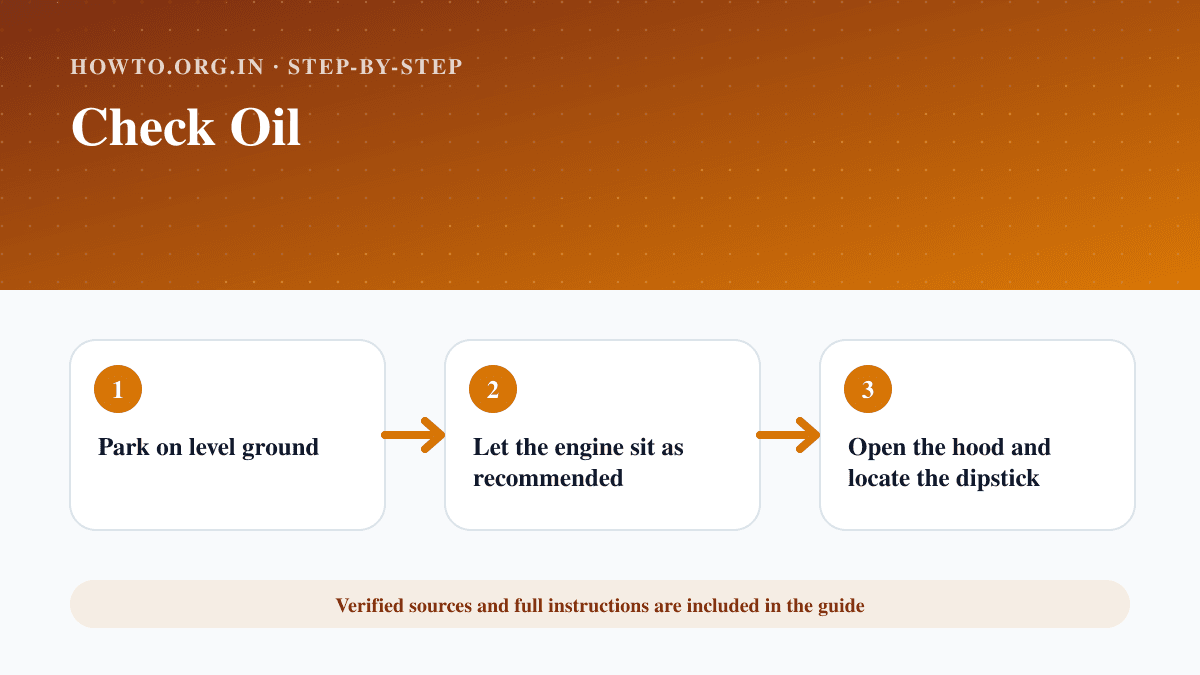
To check engine oil, park on level ground, turn the engine off, wait as your owner manual recommends, pull the dipstick, wipe it clean, reinsert it fully, pull it out again, and read the oil level between the low and full marks. Add only the correct oil in small amounts if the level is low.
Tools Required
- Clean lint-free cloth or paper towel
- Owner manual
- Correct engine oil if topping up
- Funnel
- Gloves if desired
Safety Precautions
- Check your owner manual because some vehicles require warm-engine checks and some require cold-engine checks.
- Keep hands, sleeves, and cloth away from belts, fans, and hot engine parts.
- Do not overfill engine oil.
- Do not drive if the oil warning light is on, oil is leaking heavily, or the engine is making abnormal noise.
Step-by-Step Instructions
- Step 1
Park on level ground
A sloped driveway can make the dipstick reading misleading. Park flat and set the parking brake.
- Step 2
Let the engine sit as recommended
Many cars need a few minutes after shutdown so oil drains back to the pan. Follow your manual if it gives a specific method.
- Step 3
Open the hood and locate the dipstick
Look for a loop or handle, often yellow or orange. If your car has no dipstick, use the electronic oil-level process in the owner manual.
- Step 4
Pull and wipe the dipstick
Remove the dipstick and wipe the oil from the end so the first messy reading does not confuse you.
- Step 5
Reinsert it fully
Push the dipstick all the way back into the tube, then wait a moment.
- Step 6
Pull it again and read the level
Hold the dipstick level and look where the oil film reaches. The safe range is usually between low and full marks, holes, or crosshatching.
- Step 7
Check oil condition
Dark oil can be normal, but milky oil, metal particles, fuel smell, or gritty sludge needs professional inspection.
- Step 8
Add oil only if needed
Use the correct oil grade from the manual. Add a small amount through the oil-fill cap, wait, and recheck.
Practical Example
Example: You park level, wait 5 minutes after turning off the engine, wipe and reinsert the dipstick, and read the level near the low mark. Your manual lists 0W-20, so you add a small amount with a funnel, wait, and recheck until the level is safely between low and full.
Common Mistakes
- Reading the first dipstick pull without wiping it
- Checking on a steep driveway
- Adding a full quart without rechecking
- Using the wrong oil grade
- Ignoring oil that looks milky, gritty, or smells strongly of fuel
- Confusing transmission fluid and engine oil dipsticks on older vehicles
Troubleshooting
The dipstick is hard to read
Wipe it again, reinsert fully, and check both sides in good light. The lower consistent oil line is usually the real level.
There is no dipstick
Some cars use an electronic oil monitor. Follow the dashboard or infotainment procedure in the owner manual.
Oil level keeps dropping
Look for leaks under the car and blue exhaust smoke. Schedule a mechanic visit if oil loss repeats.
Oil is above the full mark
Do not keep adding oil. Overfilling can cause problems; have excess oil drained if needed.
When to Visit a Mechanic
- The oil warning light is on.
- You see heavy oil leaks under the vehicle.
- Oil looks milky or foamy.
- The engine knocks, ticks loudly, or smells burnt.
- You are unsure which oil grade your vehicle needs.
Sources and Review
Reviewed by Pramod Tiwari, Editor; official-source verification on 2026-08-08.
- How To Check Your Oil — AAA Club Alliance
- How Often Should You Change Your Oil? — AAA
Helpful Internal Links
FAQs
Should I check oil hot or cold?
Follow your owner manual. Many cars are checked warm after waiting a few minutes, but procedures vary.
What oil level is safe?
The oil should be between the low and full marks. Do not intentionally overfill above the full mark.
How often should I check engine oil?
A monthly check is a practical habit, and you should check before long trips or if you notice leaks, smells, or warning lights.
Can I mix oil brands?
Using the correct viscosity and specification matters more than brand. If unsure, use the oil listed in your owner manual.
Related Guides
How to Change Oil
Learn how to change engine oil safely at home, choose the right oil, replace the filter, check for leaks, dispose of used oil, and avoid common mistakes.
How to Check Tire Pressure
Learn how to check tire pressure safely with a gauge, find the correct PSI, add or release air, avoid common mistakes, and troubleshoot low-pressure warnings.
How to Change a Tire
Learn how to change a flat tire safely with a tool checklist, safety warnings, step-by-step instructions, troubleshooting, common mistakes, and FAQs.
Help us improve this guide
Tell us about an outdated instruction, unclear step, broken link or safety concern. Do not include passwords, account numbers, medical records or other sensitive information.