
How to Plan a Road Trip
Learn how to plan a road trip with route, stops, budget, car checks, packing, lodging, emergency kit, common mistakes, troubleshooting, and FAQs.
Quick Answer
To plan a road trip, choose your destination and dates, map the route, estimate drive times and fuel, plan overnight stops, check your vehicle, pack documents and an emergency kit, download offline maps, budget for food, lodging, tolls, and attractions, and leave flexible time for rest and delays.
What You Need
- Destination and dates
- Route map
- Vehicle check
- Driver license and insurance
- Fuel and lodging budget
- Emergency car kit
- Offline maps
- Snacks and water
Safety Precautions
- Check tires, oil, brakes, lights, wipers, and spare before long drives.
- Do not plan dangerously long driving days.
- Share your route with someone trusted.
- Avoid driving while tired.
- Check weather and road closures.
Step-by-Step Instructions
- Step 1
Choose the route style
Decide whether the trip is fastest route, scenic route, national parks, cities, food stops, or family visits.
- Step 2
Map daily driving limits
Set realistic daily driving hours with breaks and backup stops.
- Step 3
Estimate costs
Budget fuel, lodging, food, parking, tolls, attractions, insurance, and emergency repairs.
- Step 4
Check the vehicle
Inspect tire pressure, oil, wipers, lights, brakes, coolant, and spare tire.
- Step 5
Book key stops
Reserve lodging or campsites in busy areas, but leave some flexibility.
- Step 6
Prepare navigation
Download offline maps and save important addresses.
- Step 7
Pack essentials
Bring documents, chargers, water, snacks, first aid, flashlight, jumper cables, and weather gear.
- Step 8
Plan rest and safety
Rotate drivers if possible and stop before fatigue becomes dangerous.
Practical Example
Example: You plan a four-day road trip, limit driving to six hours per day, book two hotels, check tire pressure and oil, download offline maps, and pack a small roadside kit.
Common Mistakes
- Overloading each day
- Skipping car checks
- Ignoring parking and toll costs
- Relying only on cell signal
- Not booking busy locations
- Driving tired to stay on schedule
Troubleshooting
The route takes longer than expected
Cut lower-priority stops and add buffer time.
Weather changes
Check road conditions, delay travel if unsafe, and choose alternate routes.
Car warning light appears
Stop safely, check the manual, and seek service before continuing if needed.
Hotels are full
Search nearby towns, adjust route, or book key nights earlier next time.
Helpful Internal Links
FAQs
How many hours should I drive per day?
It depends on drivers and conditions, but beginners should plan conservative days with breaks.
What should I check before a road trip?
Check tires, oil, lights, wipers, brakes, coolant, spare, documents, and emergency supplies.
Should I book hotels ahead?
Book ahead for popular areas, holidays, national parks, or late-night arrivals.
Do I need offline maps?
Yes, they are useful in low-signal areas or if mobile data fails.
Related Guides
How to Plan a Trip
Learn how to plan a trip with destination, budget, dates, documents, transport, accommodation, itinerary, packing, safety, mistakes, and FAQs.
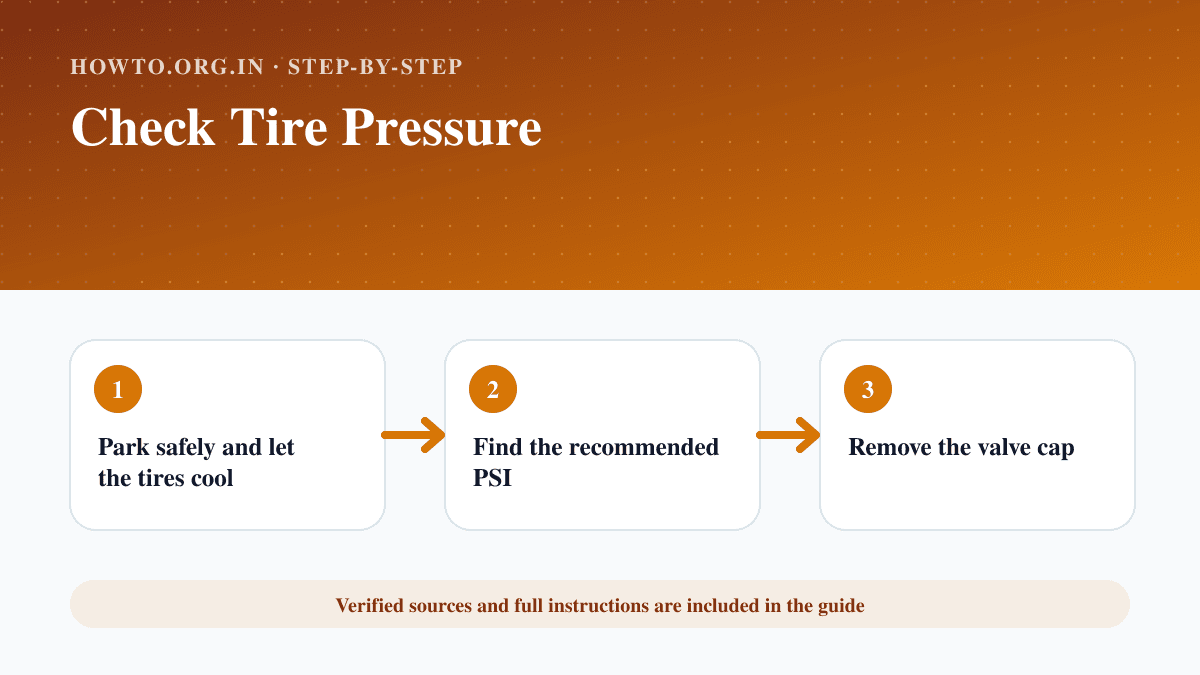
How to Check Tire Pressure
Learn how to check tire pressure safely with a gauge, find the correct PSI, add or release air, avoid common mistakes, and troubleshoot low-pressure warnings.
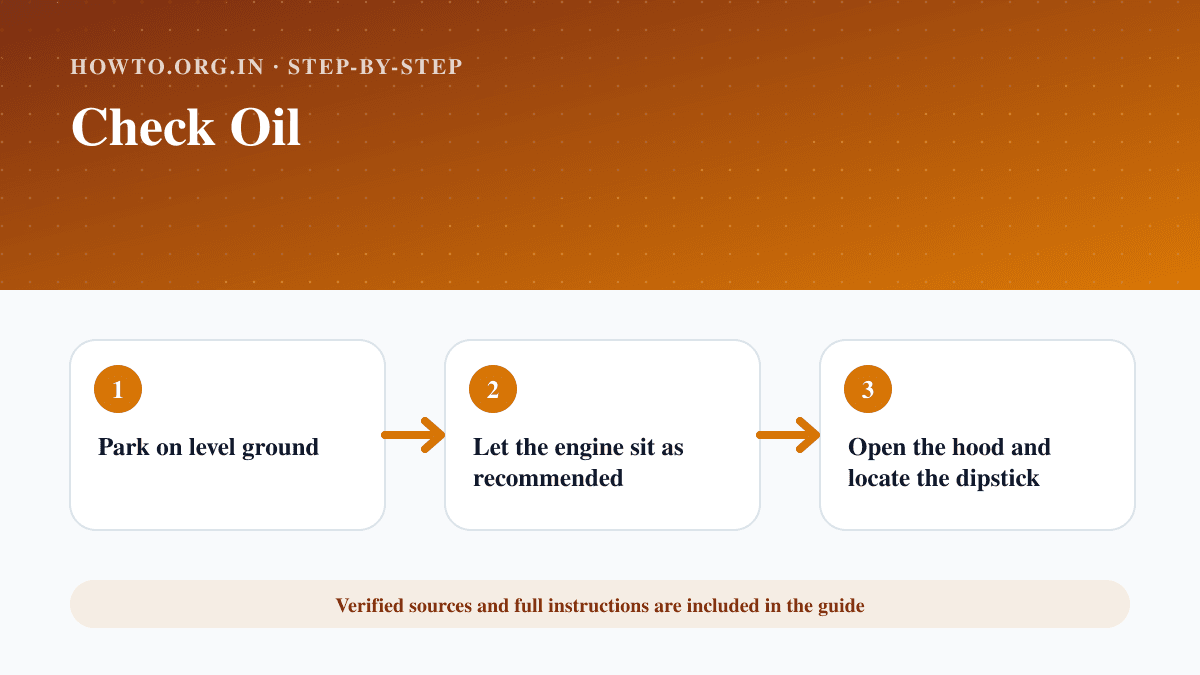
How to Check Oil
Learn how to check engine oil with a dipstick, read the level correctly, add oil safely, spot warning signs, and know when to visit a mechanic.
Help us improve this guide
Tell us about an outdated instruction, unclear step, broken link or safety concern. Do not include passwords, account numbers, medical records or other sensitive information.