
How to Spot a Phishing Email
Learn how to spot phishing emails with sender checks, urgent language, suspicious links, attachments, payment requests, reporting steps, and FAQs.
Quick Answer
To spot a phishing email, check the sender address, look for urgent or threatening language, avoid clicking unexpected links, hover or long-press to inspect URLs, be suspicious of attachments and payment requests, verify through the official website or phone number, and report the message.
What You Need
- Email app
- Official website or phone number for verification
- Password manager if available
- Spam/report button
- Security contact for work emails
Safety Precautions
- Do not open unexpected attachments.
- Do not enable macros from emailed documents.
- If you clicked a suspicious link, change passwords from the official site and review account activity.
- Use multifactor authentication on important accounts.
Privacy and Safety Notes
- Do not reply with passwords, codes, bank details, ID numbers, or payment information.
- Never share one-time codes with someone who contacted you.
- Use official websites typed manually instead of email links.
- Report suspicious work emails to your IT or security team.
Step-by-Step Instructions
- Step 1
Check the sender
Look beyond the display name and inspect the full email address.
- Step 2
Notice pressure tactics
Phishing often uses urgency, fear, prizes, account holds, missed deliveries, or threats.
- Step 3
Inspect links safely
Hover on desktop or long-press on mobile to preview URLs without opening them.
- Step 4
Question attachments
Unexpected invoices, shipping notices, forms, or shared files can be risky.
- Step 5
Verify independently
Go to the official website or call a known number instead of using email links.
- Step 6
Report the email
Use spam, phishing, or security reporting tools in your email app or workplace.
- Step 7
Secure accounts if needed
If you interacted with the message, change passwords, enable MFA, and monitor activity.
Practical Example
Example: An email says your bank account is locked and asks you to click a link. You close the email, type the bank website manually, and find no alert.
Common Mistakes
- Trusting the display name
- Clicking because the logo looks real
- Sharing one-time codes
- Opening unexpected attachments
- Using email links for account recovery
- Ignoring suspicious grammar or odd domains
Troubleshooting
I clicked the link
Do not enter more information. Change the affected password from the official site and review account activity.
I entered my password
Change it immediately, enable MFA, and update any account using the same password.
It might be a work email
Report it to IT or security before replying or opening attachments.
The email looks real
Verify through a separate official channel and do not rely on email links.
Helpful Internal Links
FAQs
What is phishing?
Phishing is a scam that tricks people into giving information, money, or access by impersonating a trusted source.
Are all phishing emails badly written?
No. Some look polished and convincing, so verify sender, links, and context.
Can phishing happen by text?
Yes. Similar scams can arrive by email, text, messaging apps, social media, or phone.
What should I do with a phishing email?
Do not interact. Report it, delete it, and secure accounts if you clicked or shared information.
Related Guides
How to Create a Strong Password
Learn how to create a strong password with passphrases, password managers, MFA, unique passwords, mistakes, troubleshooting, and FAQs.
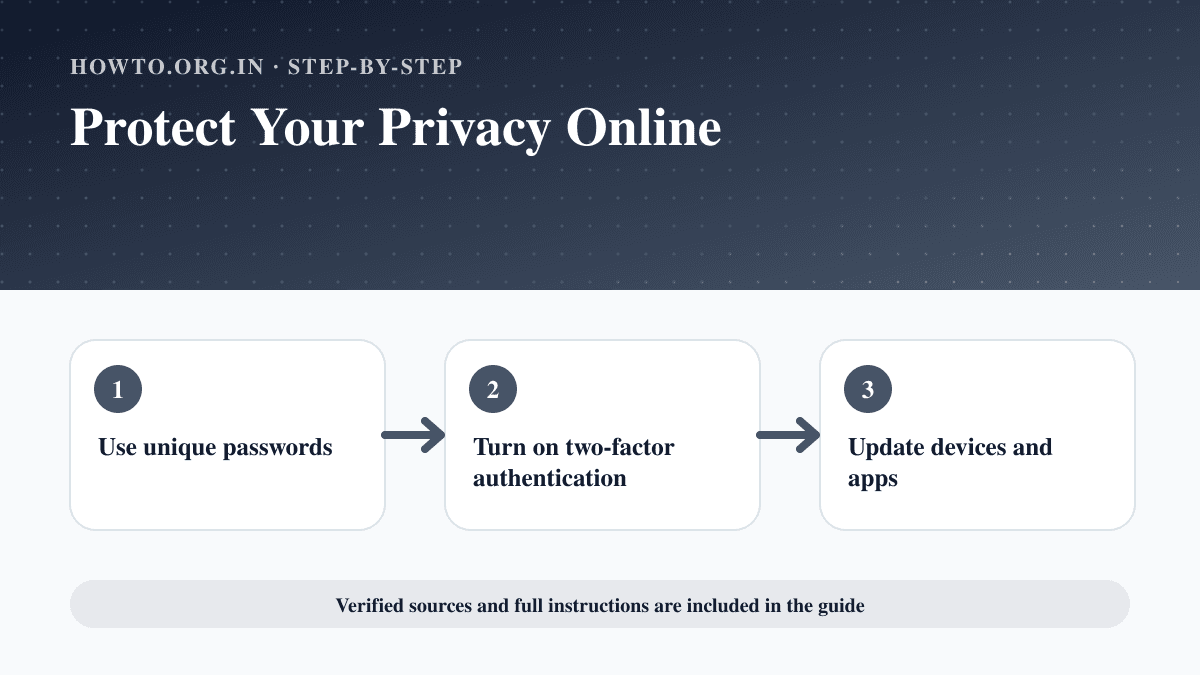
How to Protect Your Privacy Online
Learn practical ways to protect your privacy online with passwords, app permissions, location settings, updates, browsers, data sharing, mistakes, and FAQs.
How to Use Facebook
Learn how to use Facebook as a beginner, including profile setup, posting, friends, groups, privacy settings, safety tips, mistakes, and FAQs.
Help us improve this guide
Tell us about an outdated instruction, unclear step, broken link or safety concern. Do not include passwords, account numbers, medical records or other sensitive information.